Best Time to Go on Safari in Kenya
Last reviewed 13 September 2026. Season dates are averages. The Kenya Meteorological Department notes that onset and duration of wet and dry seasons have become harder to predict.
When is the best time to go on safari in Kenya?
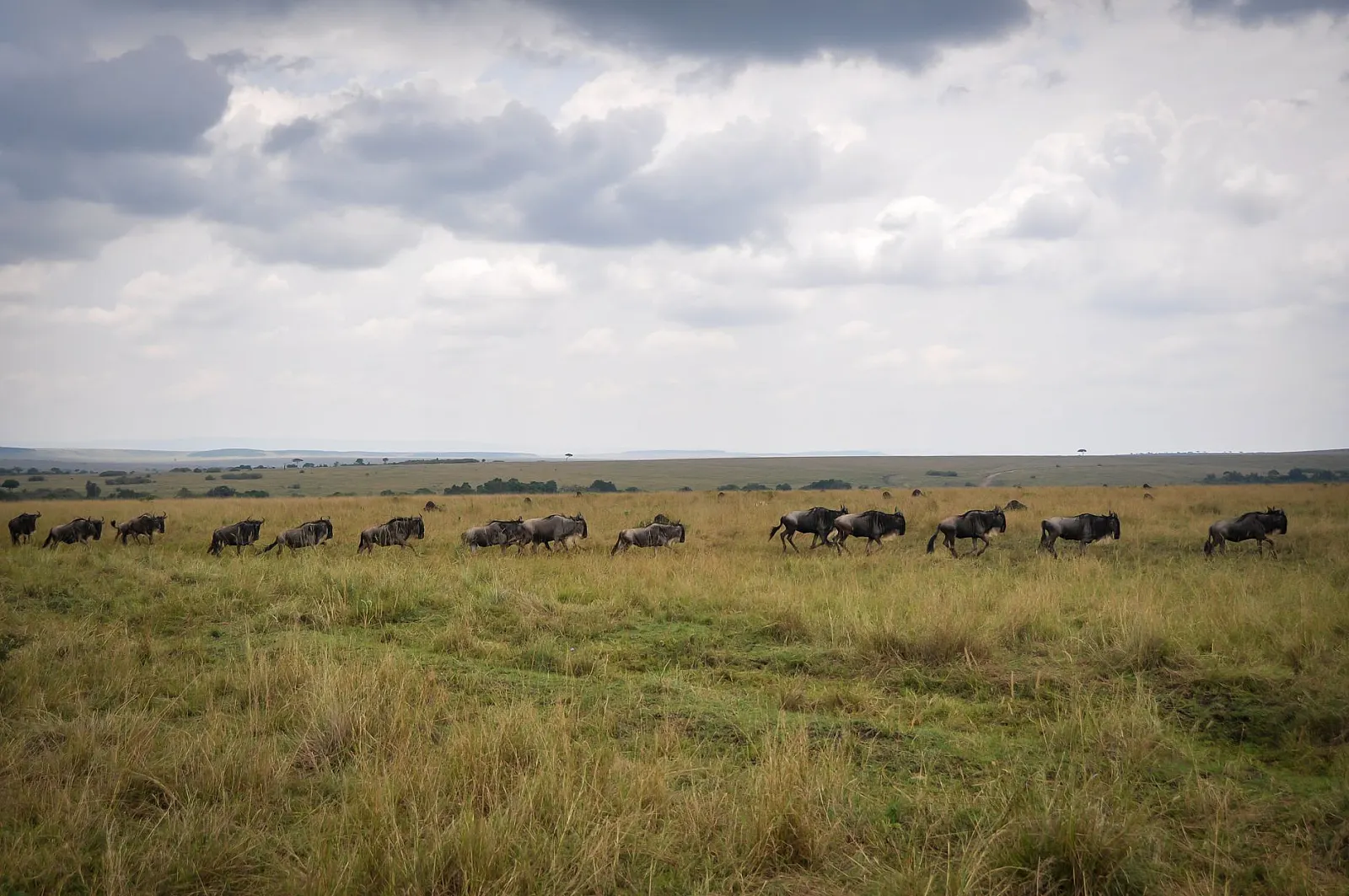
July to October is the headline answer, and for once the consensus is right — but for two separate reasons that are worth separating. First, it is the long dry season: grass is grazed and burnt down, seasonal pans have gone, and game concentrates on the Mara, Talek, Ewaso Ng'iro and Amboseli swamps. Second, it is when the wildebeest migration is normally in the Maasai Mara, and when Mara River crossings occur.
If you do not specifically need the migration, late January and February are strong and considerably less crowded: hot, dry, excellent light, and the clearest views of Kilimanjaro from Amboseli.
What are Kenya's rainy seasons?
The Kenya Meteorological Department works to two main seasons, which it labels by month:
- MAM — the "long rains", March to May. Kenya's main rainfall season, and the heavier of the two. It sometimes extends into June.
- OND — the "short rains", October to December. Less intense, more scattered, often falling as afternoon storms rather than all-day rain.
Between them sit two dry periods: a hot short dry season in January and February, and the cooler long dry season from roughly late June to September or October. KMD also tracks a distinct JJA period over parts of the central Rift Valley, which is one reason blanket national statements break down regionally.
Two regional exceptions matter. The semi-arid north — Samburu, Laikipia, Meru — receives much less rain in total, so the "wet" seasons are far less disruptive there and it stays viable most of the year. The coast follows monsoon winds rather than the safari calendar, and its wettest stretch is roughly April to June.
What does each season mean for game viewing?
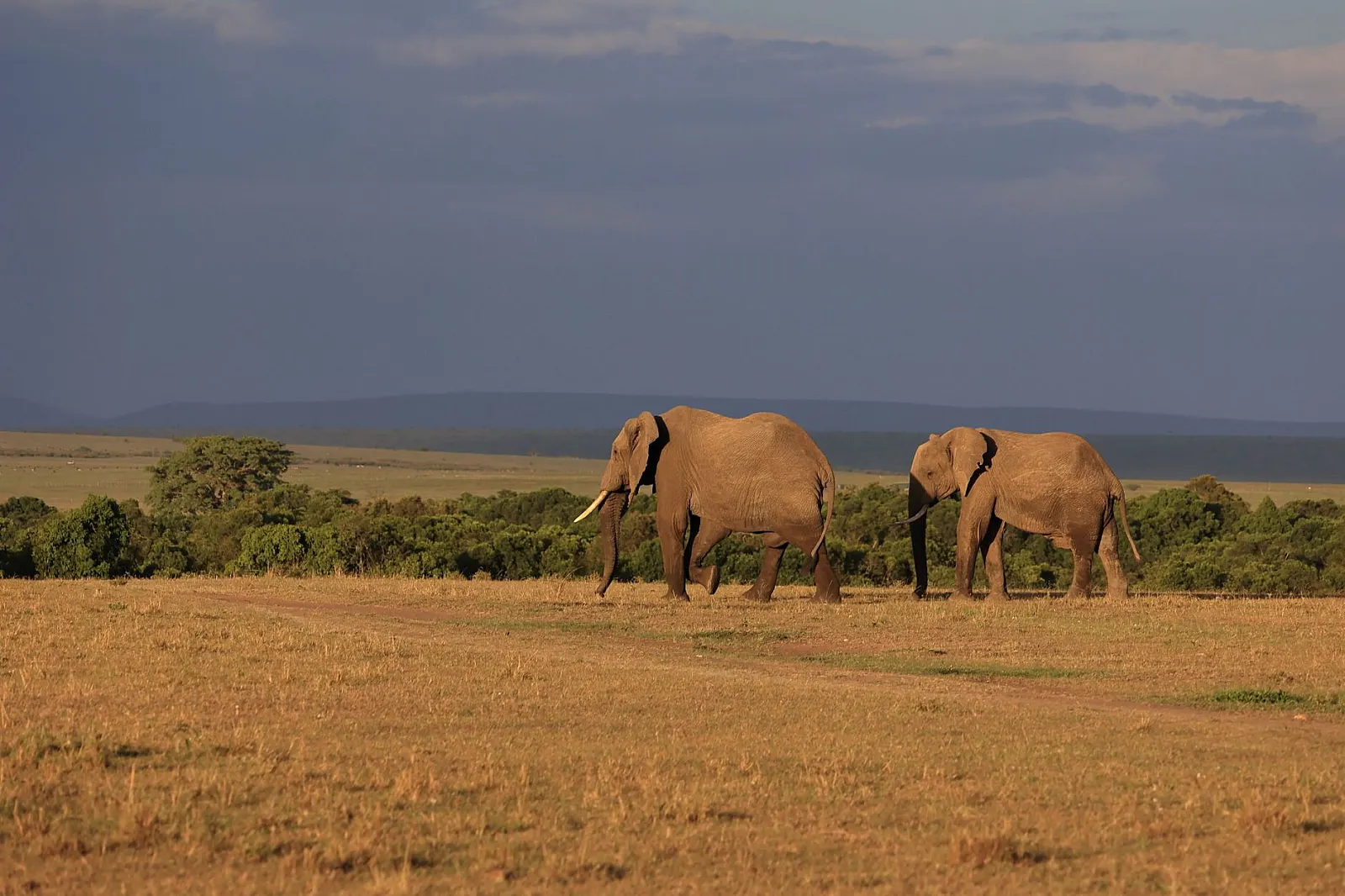
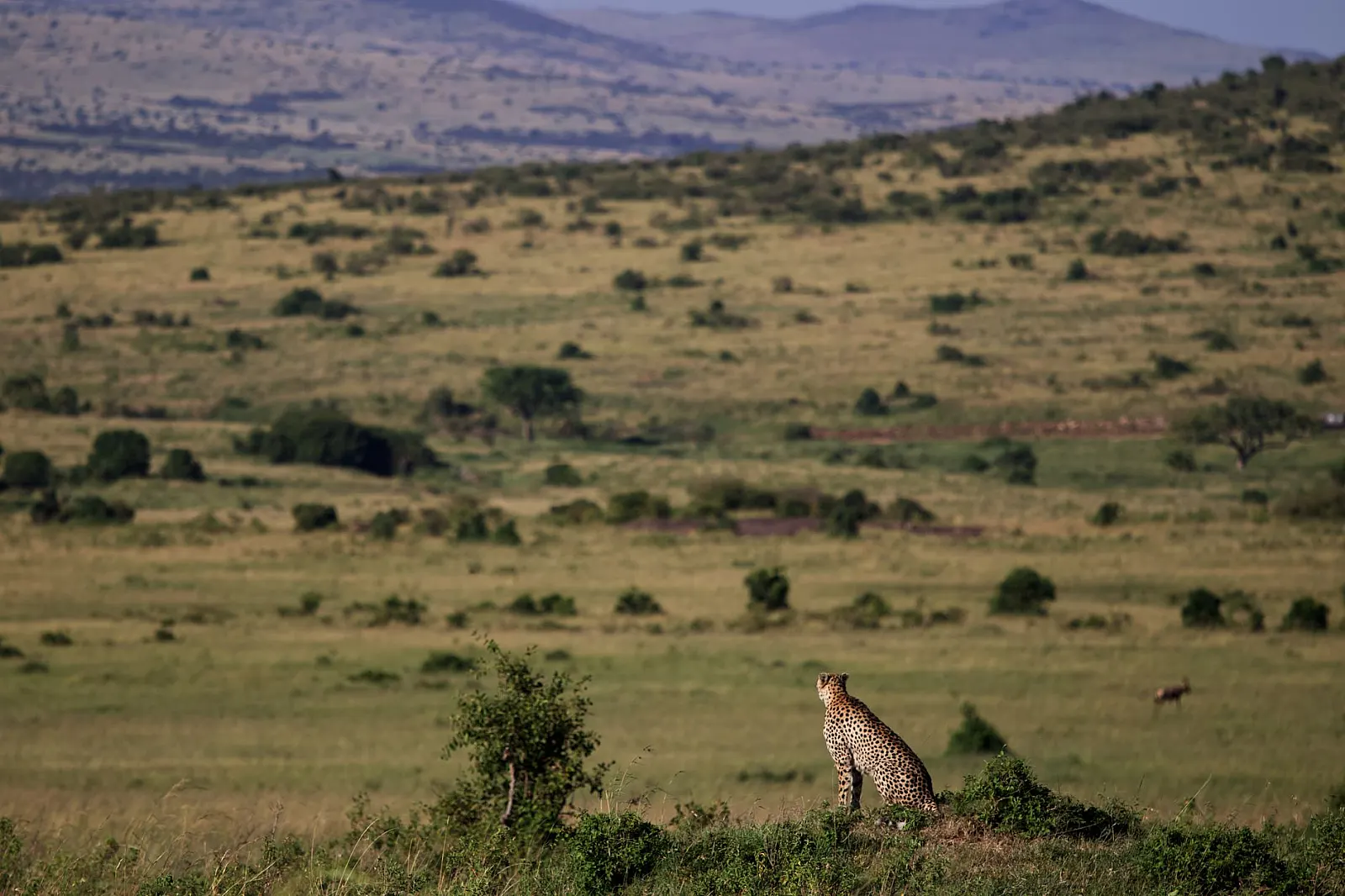
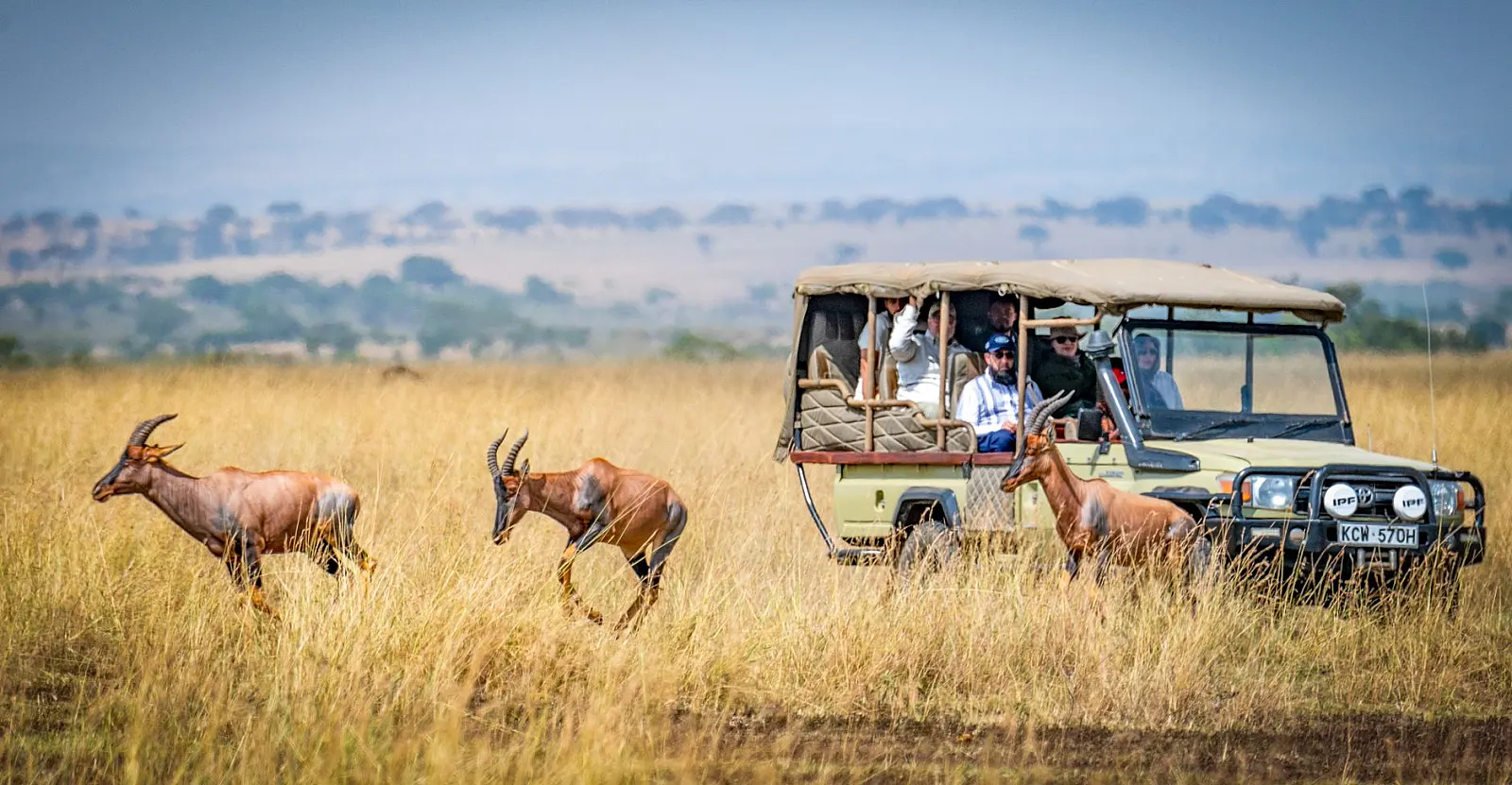
Dry season. Water is the constraint, and that is good for you: elephants, buffalo and plains game commit to the Mara's rivers and Amboseli's permanent swamps at predictable times. Grass is short — critical in the Mara, where long grass in June can hide cheetah at 30 metres. Tracks are firm, including the black-cotton soil that causes most Mara vehicle problems.
Long rains (Mar–May). Black-cotton soil turns to deep mud, off-road driving is restricted or banned, grass reaches shoulder height in places, and game disperses to seasonal water. Some camps close outright in April.
Short rains (Oct–Dec). Much milder. Rain usually falls in short afternoon bursts and drives are rarely cancelled. The bush greens fast, game disperses somewhat, but conditions remain workable — this is the best value window of the year.
Kenya safari month by month
| Month | Season | Game viewing | Crowds & price | Notable |
|---|---|---|---|---|
| January | Short dry, hot | Very good; Mara and Amboseli both strong | High to ~5 Jan, then moderate | Clearest Kilimanjaro views |
| February | Short dry, hottest | Very good | Moderate | Often the driest month |
| March | Long rains begin | Declining through the month | Falling | Rates drop sharply |
| April | Long rains peak | Weakest of the year; mud | Lowest; some camps close | Wettest month in most areas |
| May | Long rains tailing | Poor early, improving late | Low | Green, empty, cheap |
| June | Dry season starts | Good; Mara grass still long early on | Rising | Cool mornings |
| July | Dry, cool, often overcast | Very good | High | First migration herds usually reach the Mara |
| August | Dry, cool | Excellent | Peak | Mara River crossings |
| September | Dry | Excellent | Peak | Often the most reliable crossing month |
| October | Dry, warming; short rains may start late | Very good | High, easing late | Herds begin returning south |
| November | Short rains | Good; lush, few vehicles | Low | Migrant birds arrive |
| December | Short rains easing | Good; superb light | Low, then sharp peak from ~20 Dec | Green season with dry-season-quality light |
Does the migration always arrive in July?
No. The herds move in response to rainfall-driven grass growth, not a calendar. July to October is the normal window for wildebeest presence in the Mara, and crossings are most often reported from late July through September — but arrivals have been early and late, and in some years herds cross back and forth repeatedly. A specific crossing on a specific date cannot be booked.
One practical consequence of the season: Narok County operates two-tier entry pricing for the Maasai Mara National Reserve, with the higher rate applying in the busier second half of the year. Check the current published tariff at the reserve's official fee page close to travel, as rates and the season split have both changed in recent years.
When is the best time for birding in Kenya?
Birding peaks November to April — the inverse of the big-game calendar. Palearctic migrants are present, residents breed, and the Rift Valley lakes fill. Kenya's flamingo spectacle is the classic example of why timing advice must be hedged: flamingo numbers at Lake Nakuru and Lake Bogoria track water level and algal conditions rather than a season, and have shifted between lakes as water levels rose in the 2010s and 2020s. Do not plan a trip around flamingos at a named lake; check recent reports.
When should you NOT go on safari in Kenya?
April is the worst month, with May a close second and late March marginal. The long rains are heaviest, black-cotton tracks in the Mara become genuinely impassable, off-road access is restricted, and drives are cancelled. Some camps close for maintenance. If your trip is short and it is your first safari, April is not the month.
The honest counterpoint: April and May are also the cheapest months by a wide margin, the landscapes are at their most beautiful, and the northern parks — Samburu, Laikipia — absorb the long rains far better than the Mara does. A green-season Kenya trip weighted to the north is a defensible choice; a green-season Mara-only trip is a gamble.
The second thing to avoid is the Mara in late December and early January, and again in August, if crowding bothers you. August in particular concentrates European summer holidays, peak fees and migration traffic — sightings in the reserve can draw double-digit vehicle counts. The private conservancies bordering the reserve cap vehicle numbers and are the usual workaround.