Serengeti vs Ngorongoro: Which Should You Choose?
What is the real difference between the Serengeti and Ngorongoro?
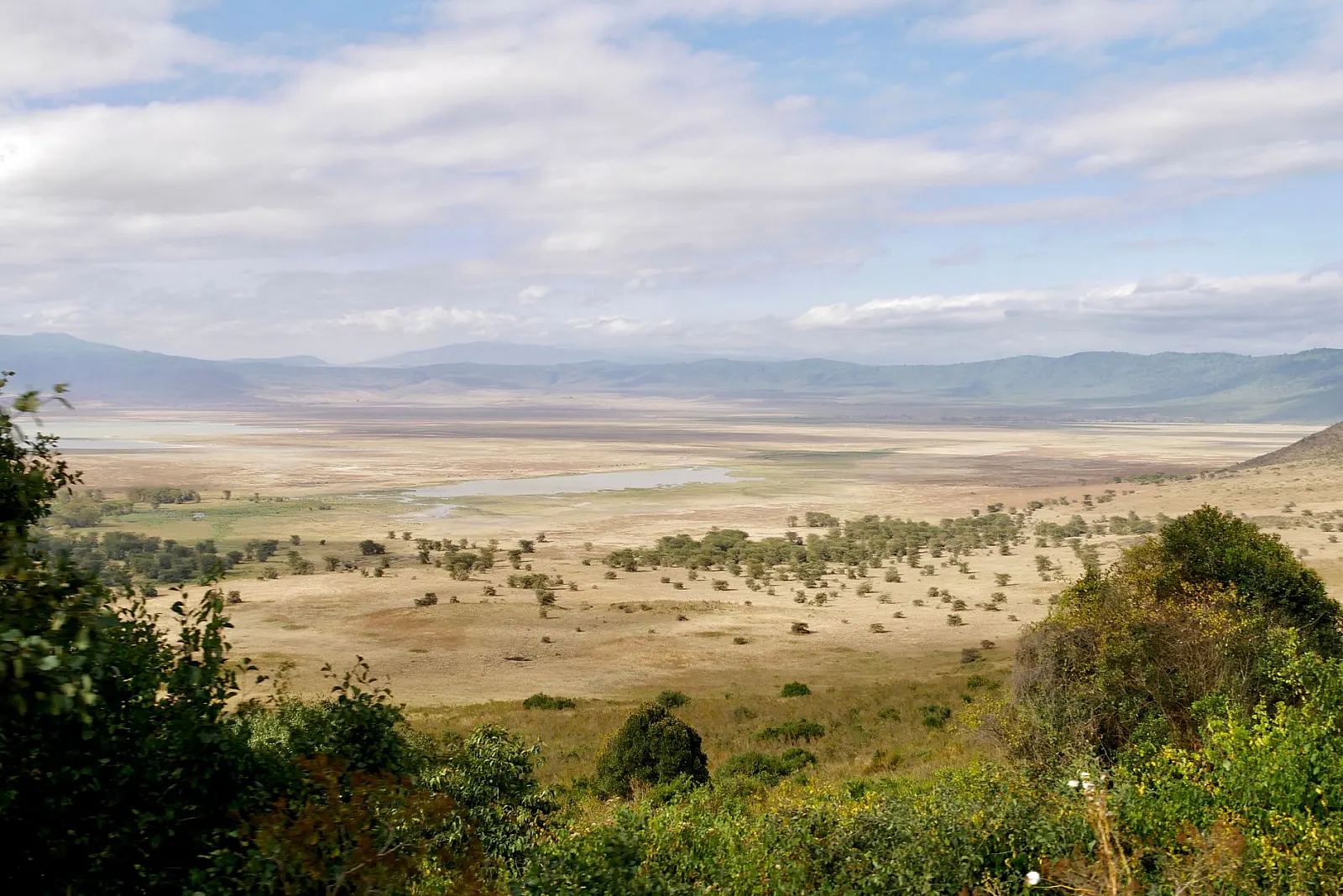
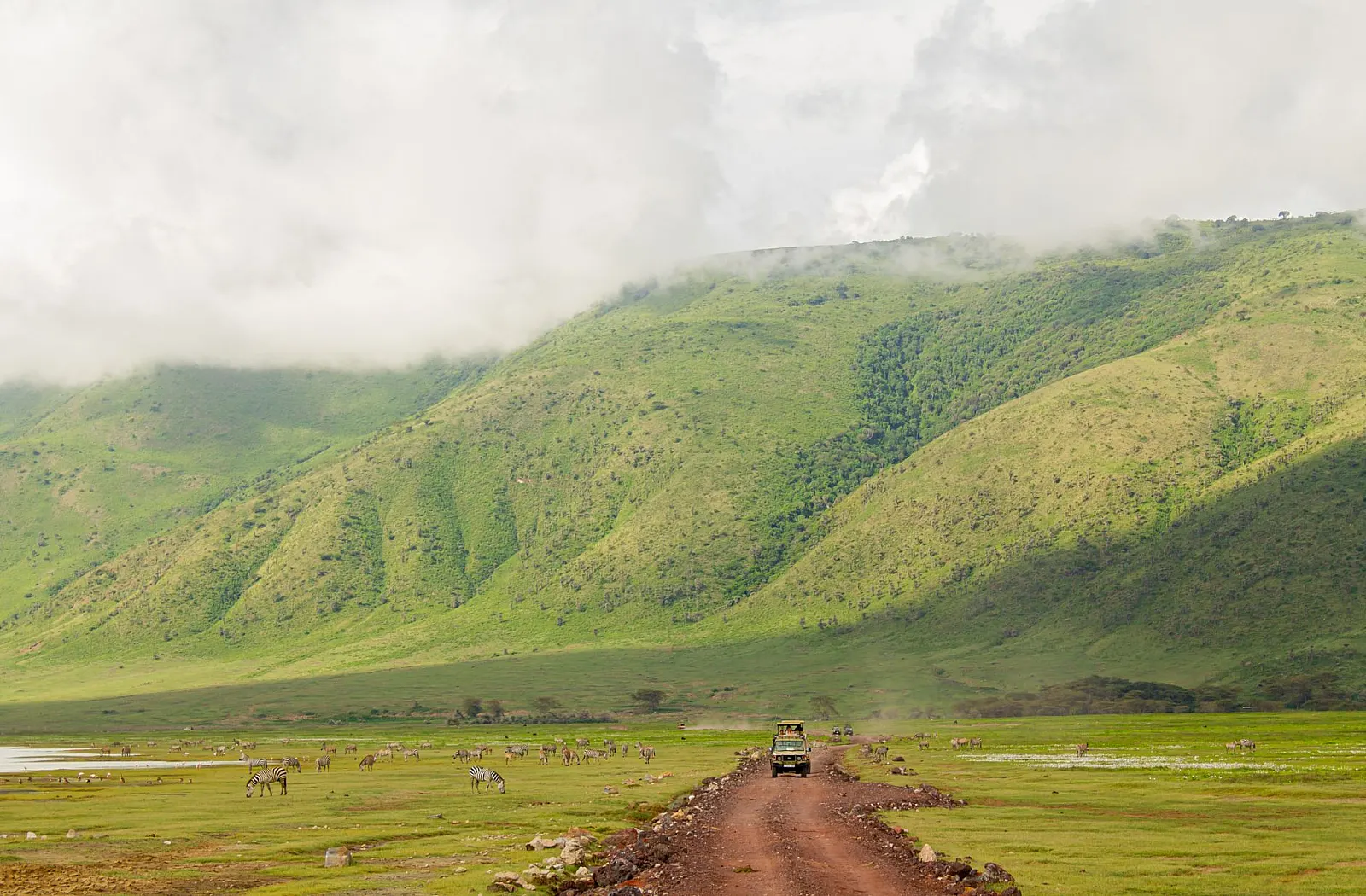
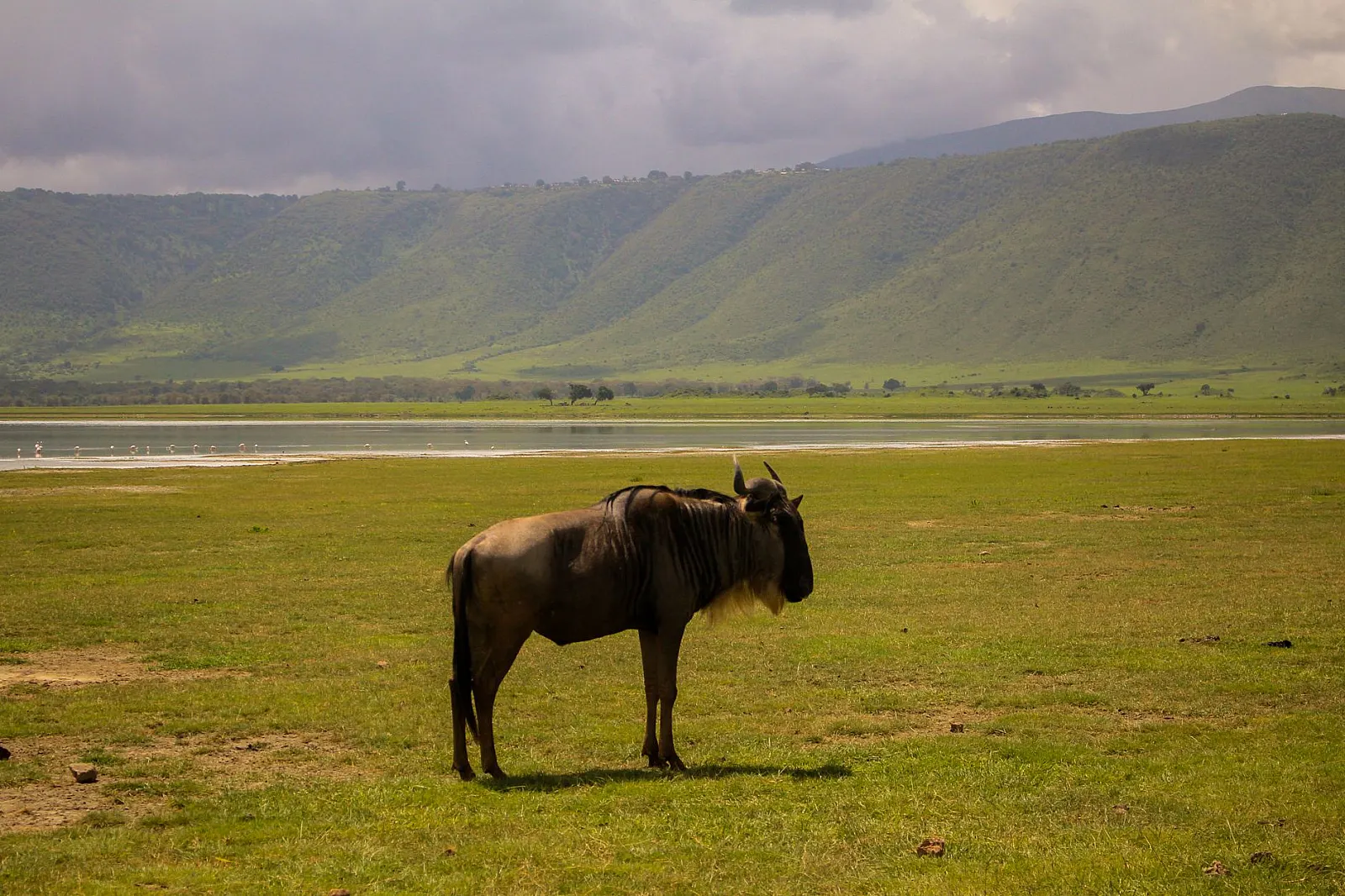
Scale, and what scale does to a game drive. The Ngorongoro Crater is a collapsed caldera of roughly 260 km², about 610 m deep, with a rim standing near 2,400 m and a floor roughly 20 km across, according to the Ngorongoro Conservation Area Authority. The wider Ngorongoro Conservation Area is far larger — 809,440 hectares, or 8,094 km², as inscribed by UNESCO — but almost all crater game viewing happens on that enclosed floor. Serengeti National Park covers 1,476,300 hectares, or 14,763 km² (UNESCO). The Serengeti is therefore about 57 times the area of the crater floor.
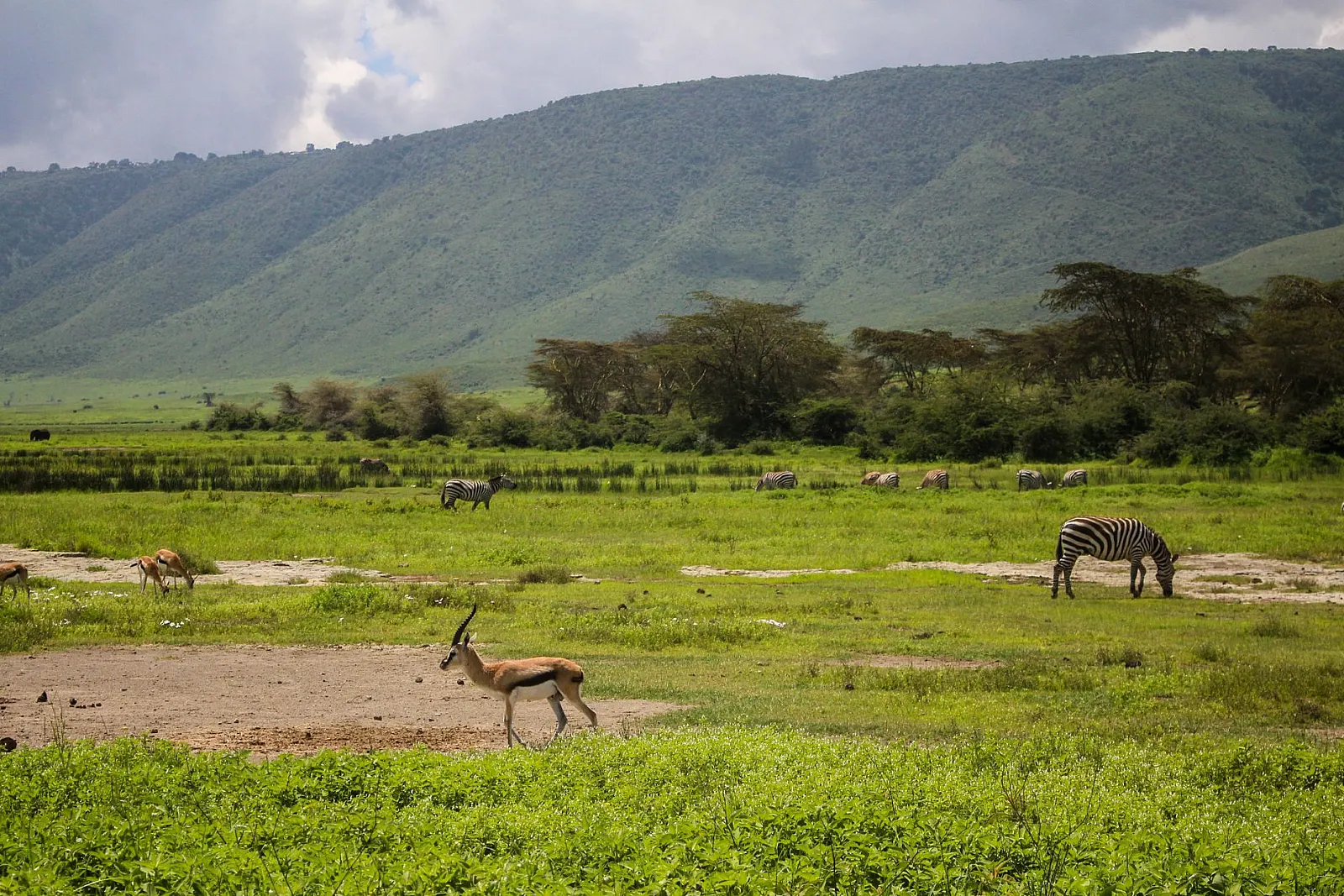
Enclosure is the whole story. The crater walls concentrate a largely resident, non-migratory population into one bowl, which the NCAA estimates at 26,000 to 28,000 animals. You drive down at dawn, and within a few hours you have usually seen a great deal. The Serengeti gives up that guarantee in exchange for variety: short-grass plains in the south, granite kopjes and riverine forest around Seronera, the western corridor, and the woodland and river country of the north.
Which gives better wildlife viewing?
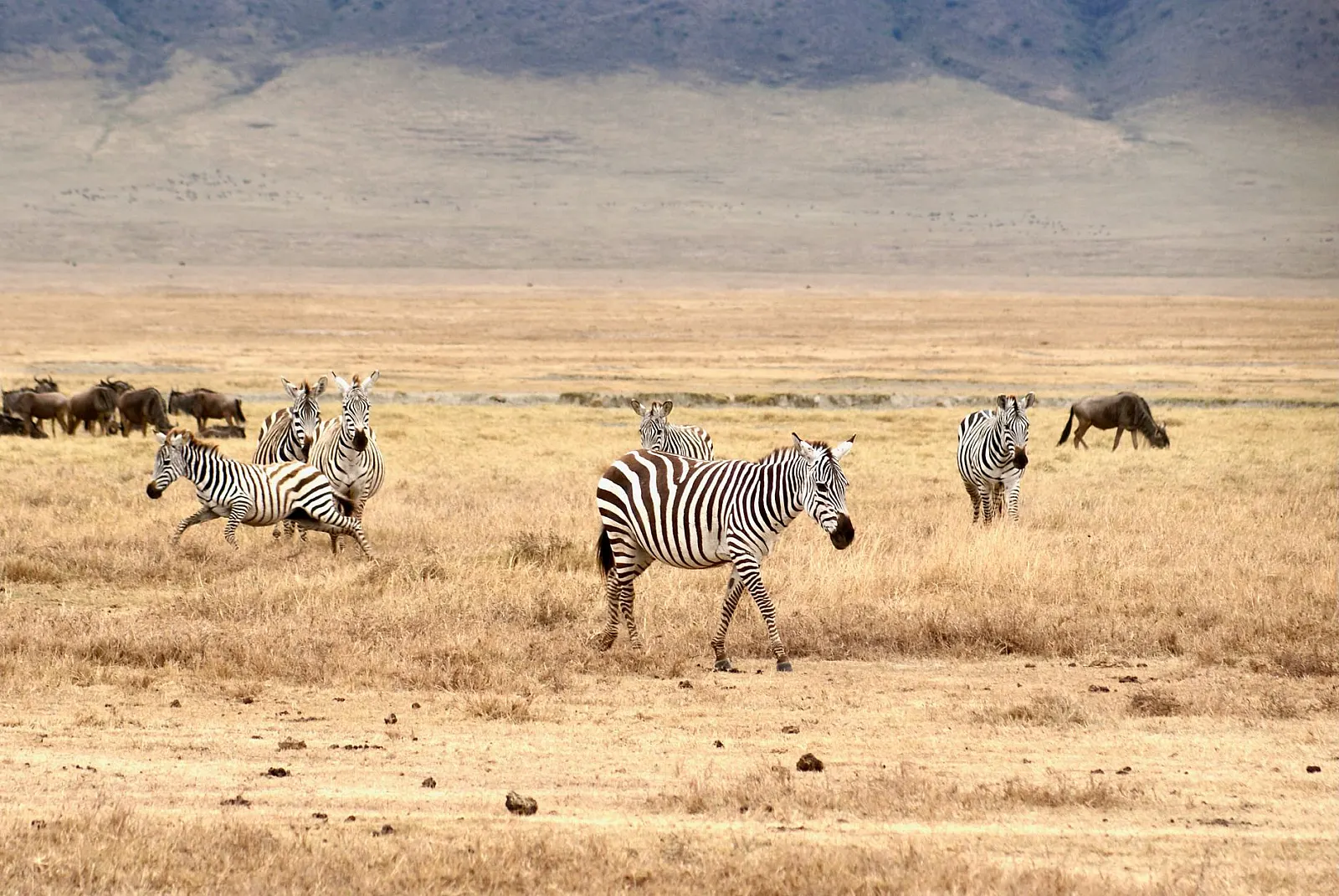
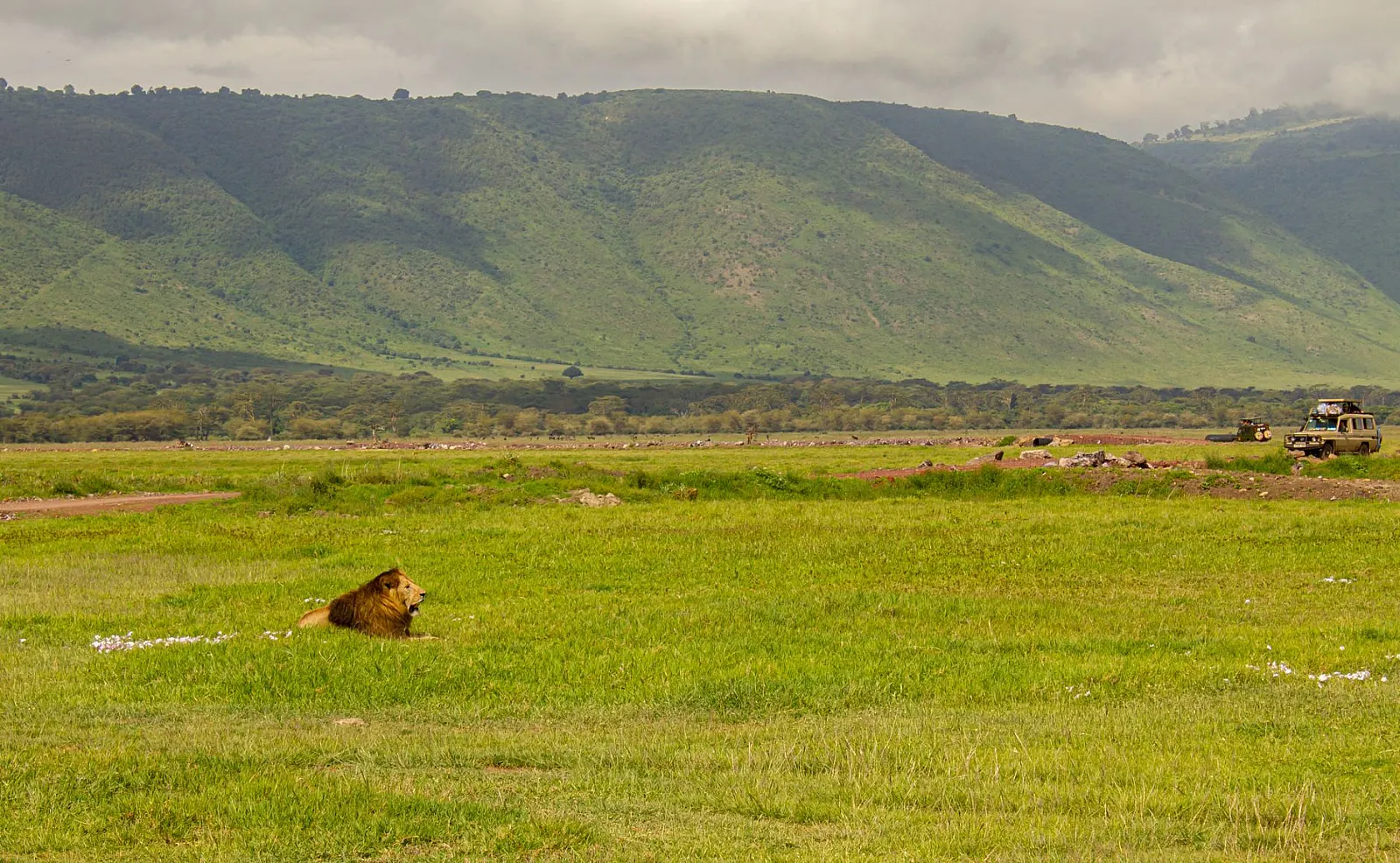
They are not competing on the same axis. The crater competes on density and on one species in particular. It holds black rhino under close ranger protection, and this is the single most reliable place in East Africa to see one, though usually at distance across open grassland. A 2023 census put Tanzania's total black rhino population at 212 animals spread across Ngorongoro, Serengeti, Mkomazi and Nyerere, reported by the Frankfurt Zoological Society. The crater also concentrates lion, elephant (mostly old bulls), buffalo, hippo, spotted hyena and, on Lake Magadi, flamingo.
What the crater does not offer is completeness. The NCAA notes that "with the exception of giraffes, the majority of animal species can be found on the crater floor" — the walls are too steep for giraffe, so a crater-only trip will not include them. Leopard on the crater floor is uncommon, and cheetah are seen far less often than on the open Serengeti plains.
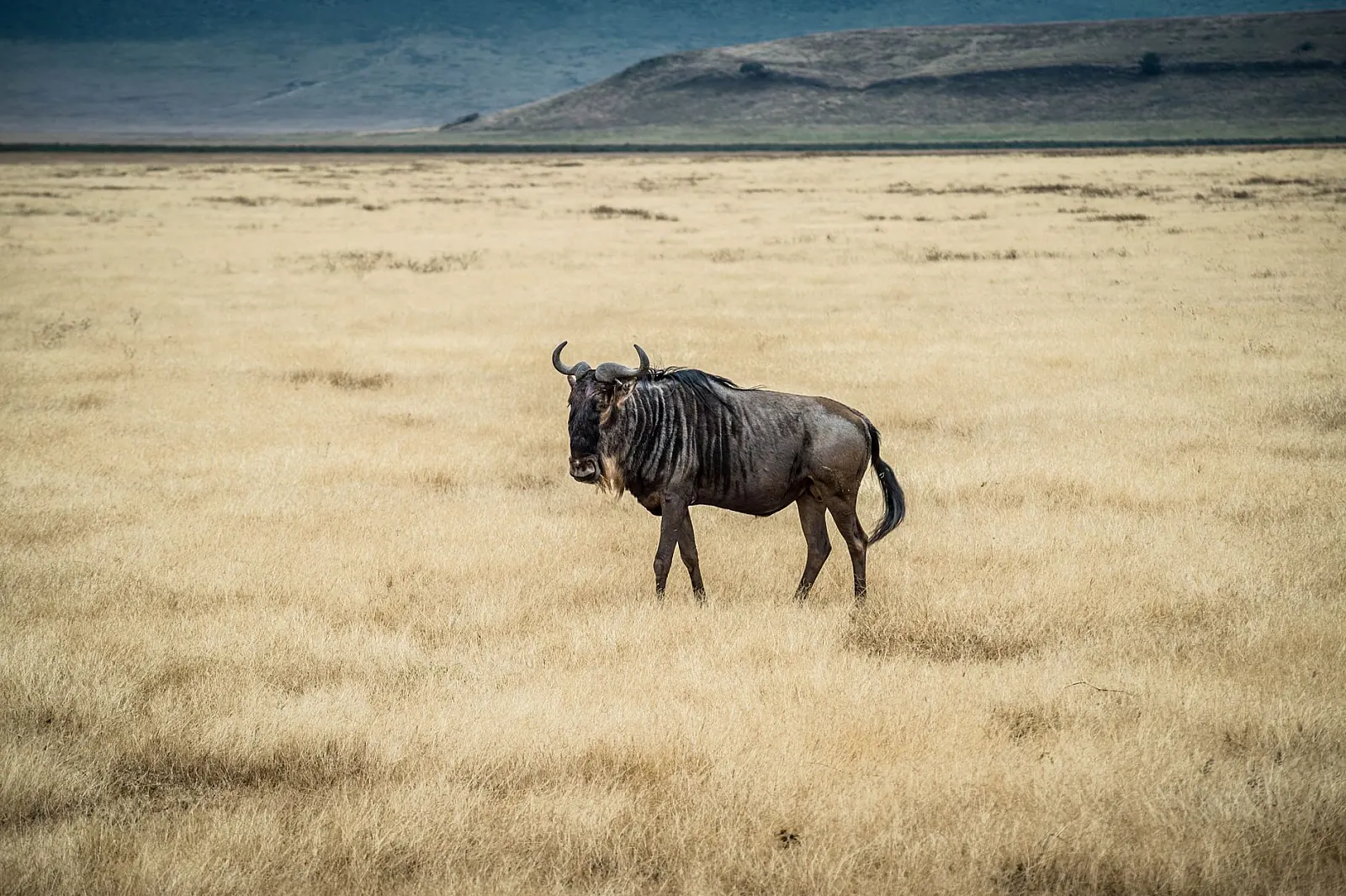
The Serengeti competes on numbers and on breadth. It supports the migration — commonly cited at over 1.3 million wildebeest, accompanied by roughly 250,000 zebra and 300,000 Thomson's gazelle, as summarised by Africa Geographic — plus the predator populations that follow it. The Seronera valley's riverine forest is one of the better leopard areas on the northern circuit, and the southern plains are strong cheetah country. Black rhino exist in the Serengeti but in very small numbers and are not a realistic sighting to plan around.
How do they compare side by side?
| Ngorongoro Crater | Serengeti National Park | |
|---|---|---|
| Area used for game viewing | Crater floor approx. 260 km² (within an 8,094 km² conservation area) | 14,763 km² |
| Landscape | Enclosed caldera; open grassland, soda lake, one small fever-tree forest | Plains, kopjes, riverine forest, woodland, rivers |
| Wildlife model | Resident, year-round, 26,000–28,000 animals (NCAA) | Migratory plus resident; 1.3m+ wildebeest in the ecosystem |
| Black rhino | Most reliable sighting in East Africa, usually distant | Present but very rare; do not plan around it |
| Giraffe | Absent from the crater floor | Common |
| Non-resident entry fee (adult 16+) | US$70.80 per person per 24h, VAT included (NCAA) | US$70 net low season / US$70 net peak — see note below |
| Extra fee to access | Crater service fee US$295 per vehicle per descent | None beyond the entry fee |
| Typical time needed | One descent, commonly around six hours | Three nights minimum; more for the migration |
| Vehicle density | High and visible, because the space is enclosed | Low in most of the park; high around Seronera in peak season |
What does each actually cost?
Compare these carefully, because the two authorities quote fees differently. Tanzania National Parks publishes rates excluding 18% VAT; the NCAA's published figures appear to be VAT-inclusive. The current published TANAPA tariff sets the Serengeti non-resident adult conservation fee at US$70 per person per 24 hours in peak season and US$60 in low season, and states plainly that "all charges are VAT (18%) exclusive". That works out at US$82.60 and US$70.80 gross. Note the counterintuitive seasons: low season is only 15 March to 15 May; peak is 16 May to 14 March.
Ngorongoro's headline entry fee of US$70.80 therefore looks identical to a low-season Serengeti day, but the crater carries a charge the Serengeti does not: a crater service fee of US$295 per vehicle per trip, payable only if you descend to the floor. Shared across six passengers that is roughly US$49 each; for a couple on a private vehicle it is nearly US$148 each. This is the most frequently misquoted number in Tanzanian safari planning — it is per vehicle, not per person. Lodges inside the conservation area also pass on an NCAA concession fee of US$59 per person per night, against US$60 per person per night (net of VAT) for Serengeti lodges in the July–September peak.
The practical consequence: a single crater day is expensive per hour of game viewing, but cheap in total because you only do it once. Serengeti nights accumulate.
How crowded is each one?
Be realistic about the crater. It is a finite floor with a fixed road network, a 6:00 a.m. descent and gates that close to new entries in the afternoon, so every vehicle in the crater that morning is in the same few square kilometres. When a lion or rhino is found, vehicles converge and it shows. Visitor pressure has grown sharply: the conservation area recorded 752,232 visitors in the 2022/23 season on widely reported NCAA figures. Nothing about the crater's geometry allows that to feel remote.
The Serengeti is the opposite except in one place. Seronera in the high season can feel as congested as the crater around a leopard sighting. The northern, western and far southern sectors are quiet by comparison, and this is the main lever a traveller controls: choosing where in the Serengeti to stay changes the crowding experience far more than choosing which month to go.
When should you go, and does the month change the answer?
For the crater, barely. The population is resident, so there is no month that empties it. Wetter conditions from March to May bring green grass, fewer vehicles and a real chance of mist on the rim road; June to October is dry, dusty and busy.
For the Serengeti, the month decides everything. Roughly January to March the herds are on the southern short-grass plains and around Ndutu for the calving season, with intense predator activity. April and May are wet, quiet and the only period with discounted park fees. From late July to October the herds are in the north, where the Mara River crossings occur. November and December see the return south.
How do they combine in one trip?
Naturally, and that is why most itineraries do. The Ngorongoro Conservation Area sits directly between Arusha and the Serengeti, and the road route passes through it, so you pay NCA charges in transit regardless. Driving Arusha to the central Serengeti takes roughly six to eight hours including the conservation area crossing, which is why the standard shape is Arusha, then Tarangire or Manyara, then a night on the Ngorongoro rim with a crater descent, then onward to the Serengeti. Flying into a Serengeti airstrip skips the drive but also skips the crater, so a fly-in Serengeti trip usually adds Ngorongoro at the end rather than the start.
Who is each genuinely better for?
- Choose Ngorongoro if you have two or three days total, want the highest chance of Big Five in one drive, want to see black rhino, are travelling with impatient children, or are adding a safari onto a Kilimanjaro climb or Zanzibar beach week.
- Choose the Serengeti if you have four days or more, want the migration, care about photography and open space, want a chance of cheetah hunting on open plains, or would rather see fewer animals with fewer vehicles around them.
- Do both if you have five days or more on the northern circuit. They are complementary rather than substitutable, and the geography makes combining them cheap in time.
- Skip the crater descent if budget is tight and you are already committed to several Serengeti nights — the US$295 vehicle fee buys one morning.