 SafariRoamer
Self-Drive Kruger vs a Private Reserve: What Actually Differs
Last reviewed 14 September 2026.
Two different ways to see the same ecosystem
Kruger National Park and the private reserves along its western boundary — Sabi Sand, Timbavati, Klaserie, Manyeleti — sit on the same unfenced landscape and the same wildlife moves freely between them. But they are run under completely different rules, and which one suits a given trip depends on budget, how much you want a guide making the decisions, and whether you want to drive yourself.
Self-drive Kruger: SANParks rest camps
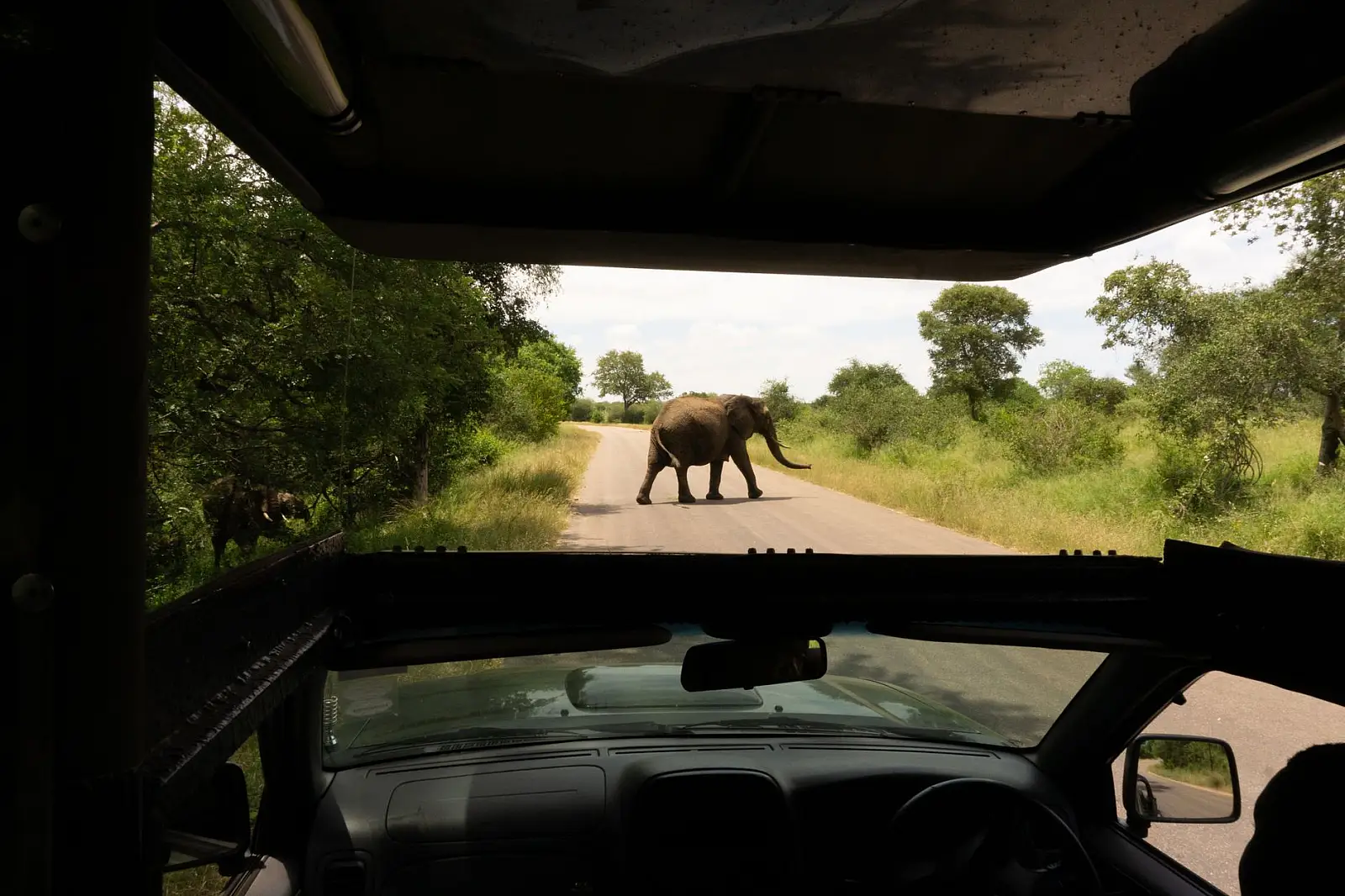
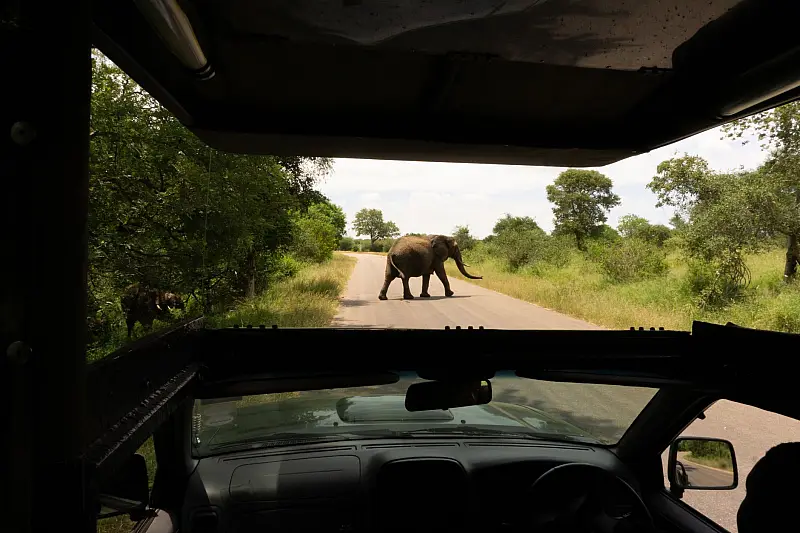
Kruger itself is unusual among major African safari parks in that visitors can drive themselves on a network of tarred and gravel roads, staying at SANParks-run rest camps such as Skukuza, Lower Sabie, Satara, Olifants and Berg-en-Dal. These camps range from furnished safari tents to self-catering bungalows and guest cottages, and the appeal is real independence at a fraction of a private lodge's cost: you set your own pace, stop where you like, and pay a park conservation fee plus camp accommodation rather than an all-inclusive rate.
The tradeoff is that public roads close at fixed gate times (game drives after dark aren't permitted for self-drive visitors), vehicles must stay on roads rather than tracking animals off-road, and sightings depend on what's visible from the road network rather than a guide actively following fresh tracks.
Private reserves: no self-drive, but off-road and after dark
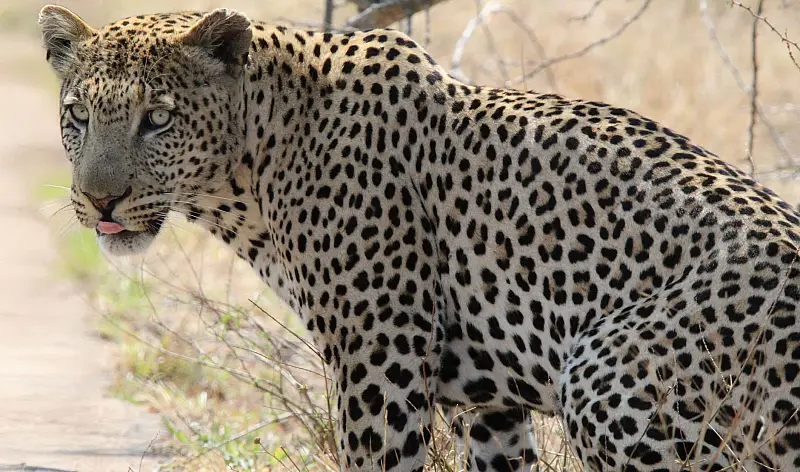
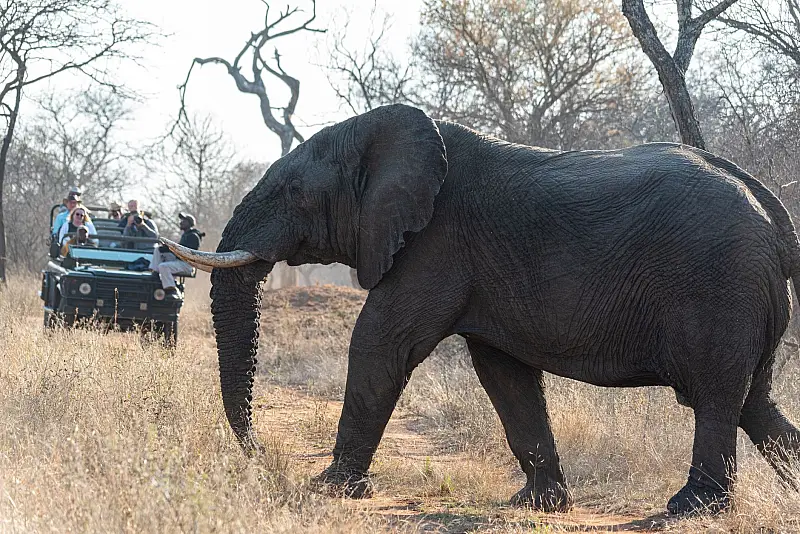
Sabi Sand and the other Greater Kruger private reserves have no public entry and no self-drive — access is only through a stay at one of the lodges operating there, at a materially higher price than a SANParks camp. In exchange, guides in open 4x4 vehicles can leave the road entirely to follow tracks and radioed sightings, and night drives with spotlights are standard, which is when many of Kruger's nocturnal predators are most active. Guides across neighbouring lodges typically share sightings by radio, which is part of why leopard sightings in Sabi Sand specifically have such a strong reputation.
At a glance
| SANParks rest camp (Kruger) | Private reserve (Sabi Sand, Timbavati, Klaserie, Manyeleti) | |
|---|---|---|
| Access | Self-drive, public roads | Lodge guests only, no self-drive |
| Guiding | Optional guided drives, extra cost | Included guided game drives |
| Off-road driving | Not permitted | Permitted, tracking sightings |
| Night drives | Not permitted for self-drive visitors | Standard, spotlight drives |
| Typical cost | Budget to mid-range | Mid-range to ultra-luxury |
| Pace | Entirely your own | Set by the lodge's drive schedule |
A regional health note: Hluhluwe-iMfolozi's malaria status is disputed by its own lodges
Away from Kruger, in KwaZulu-Natal's Hluhluwe-iMfolozi Park, two properties on this site give conflicting malaria statements for what is effectively the same area: the SANParks-equivalent Hilltop Camp describes it as a "low malaria zone," while the private Rhino Ridge Safari Lodge describes its own location as a "malaria-free sanctuary." We have not been able to resolve which is correct from the sources available, and we are not going to pick one for you — both official regional sources (CDC and NaTHNaC) place uMkhanyakude district, which contains this park, on their South Africa risk-area list, so checking with a travel health provider before visiting is the safe default regardless of which operator's framing you read first.
Which should you choose?
If budget is the main constraint, or you specifically want the freedom to set your own itinerary, a SANParks rest camp is a genuinely good way to see Kruger, not a compromise version of a "real" safari. If off-road tracking, night drives, and not touching a steering wheel matter more than cost, a private reserve delivers a different, guided experience on the same ecosystem. Several travellers combine both in one trip: a few self-drive nights in Kruger followed by a private-reserve stay.