Best Time to Go on Safari in Namibia
Last reviewed 13 September 2026. Namibia is arid and rainfall is highly variable year to year; a "wet season" can pass with almost no rain.
When is the best time to go on safari in Namibia?
May to October — the dry winter and early summer — with August to October the single best window for game viewing in Etosha. If you are combining wildlife with the desert, dunes and Skeleton Coast, April to May and September to October are the strongest all-round months: good game, tolerable temperatures, and the best photographic light.
What are Namibia's seasons?
Namibia has a single summer rainfall season, roughly November to April, concentrated in January to March, and a long dry winter from May to October. But the national average conceals an enormous gradient. The Zambezi Region in the far north-east can exceed 600 mm a year; the central highlands around Windhoek receive a few hundred millimetres; the Namib coast receives almost none.
The coast is a separate climate altogether. Swakopmund, Walvis Bay and the Skeleton Coast are cool and fog-bound for much of the year, with moisture arriving as advective fog off the Benguela Current rather than as rain. This is why the coast can be 15°C and grey while Etosha, a few hours inland, is 38°C and cloudless on the same day — and why coastal clothing advice bears no relation to safari clothing advice.
Why does the dry season transform Etosha?
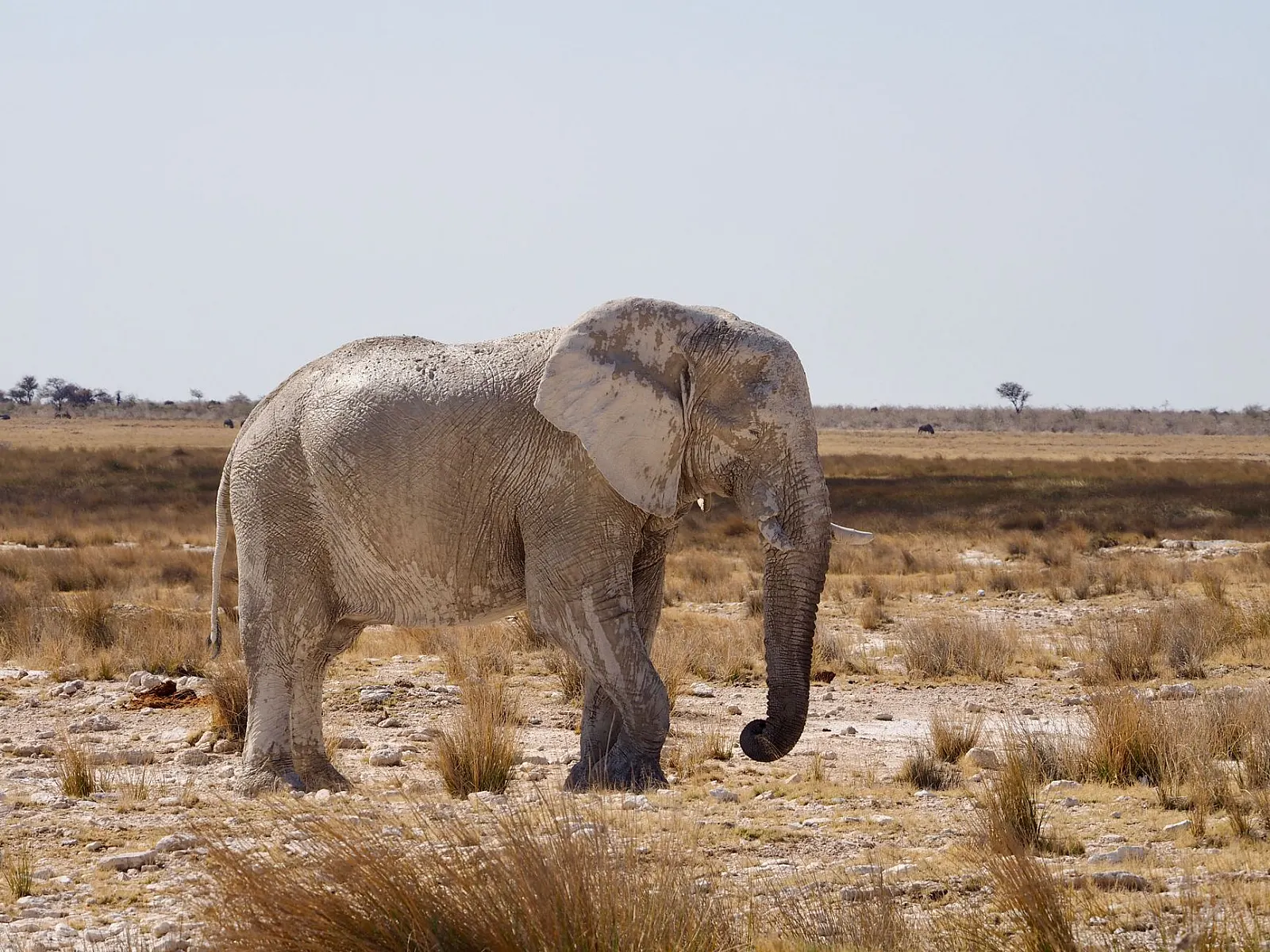
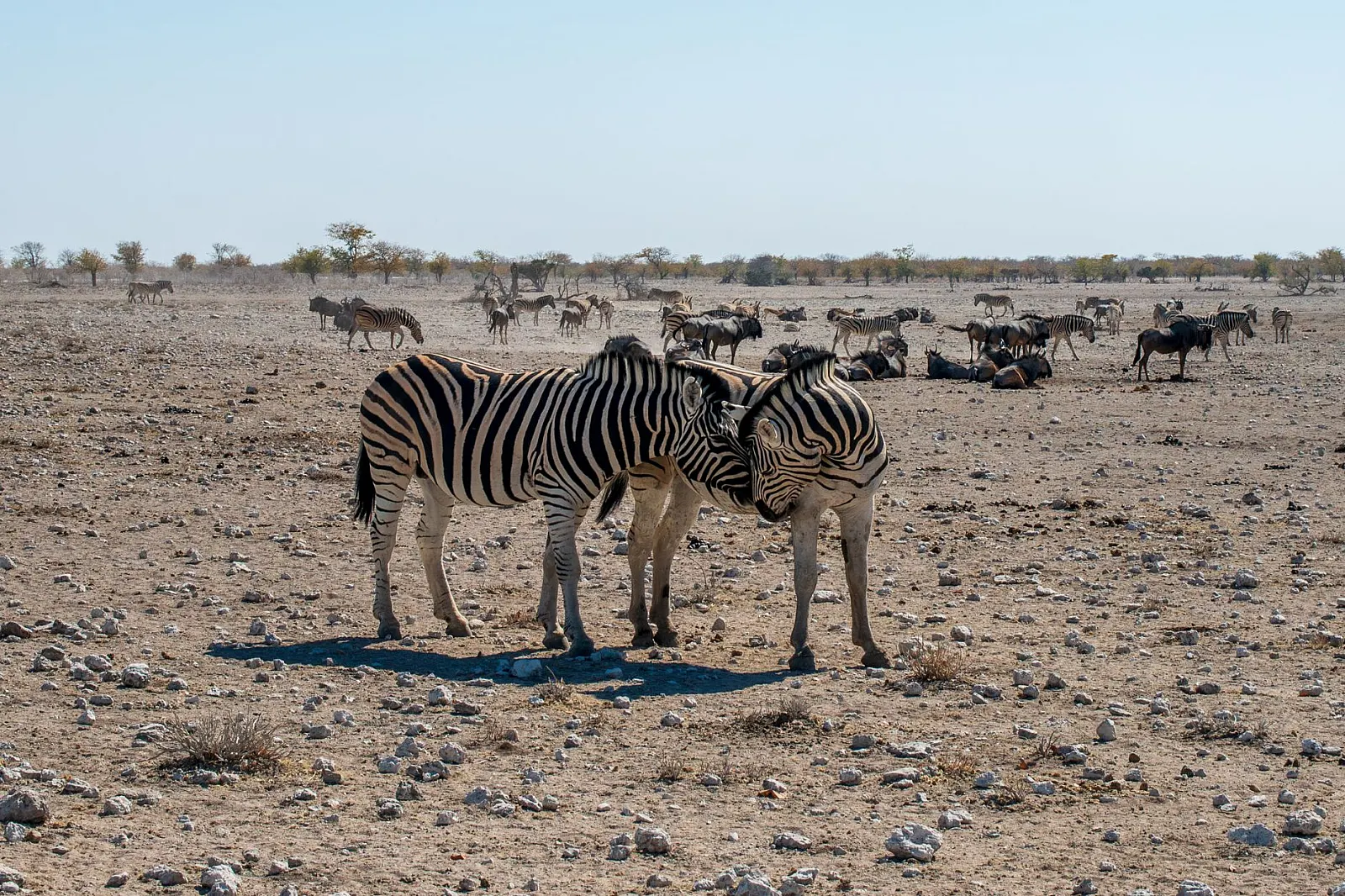
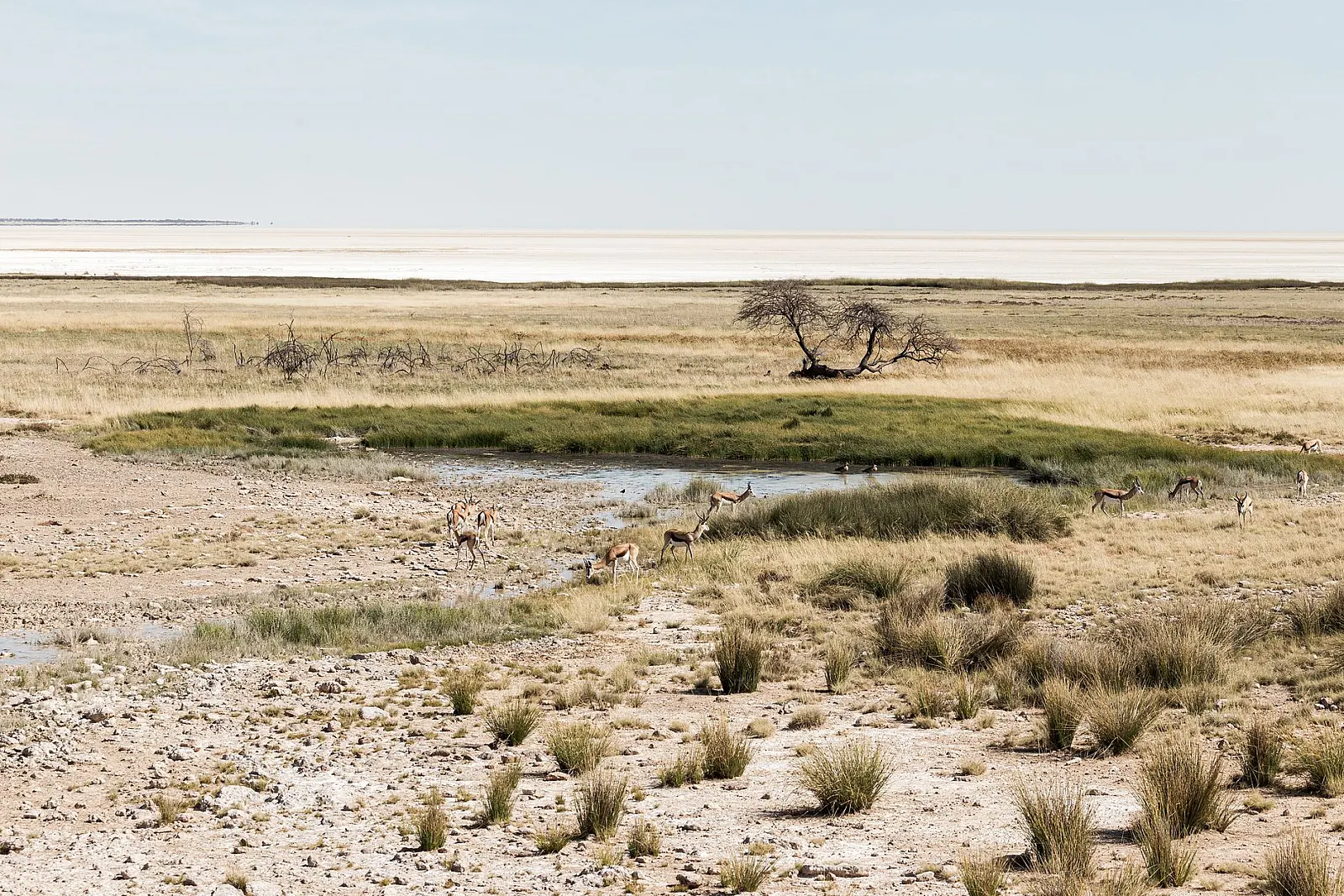
Etosha is the clearest case in Africa of water dictating game viewing. In the dry season the only water available to tens of thousands of animals is a network of waterholes — some natural artesian springs and contact springs along the pan edge, others boreholes maintained by the national parks authority. Elephant, black rhino, lion, zebra and springbok must drink every day or two, so instead of searching for animals you park at a waterhole and wait. The Ministry of Environment, Forestry and Tourism notes that Okaukuejo's floodlit waterhole regularly produces black rhino, lion and elephant at night.
In the wet season this mechanism collapses. Rain fills pans and depressions across the park, animals disperse away from the waterhole network, grass grows tall enough to conceal them, and sightings become a matter of luck. Etosha does not become a bad park in February — it becomes a difficult one.
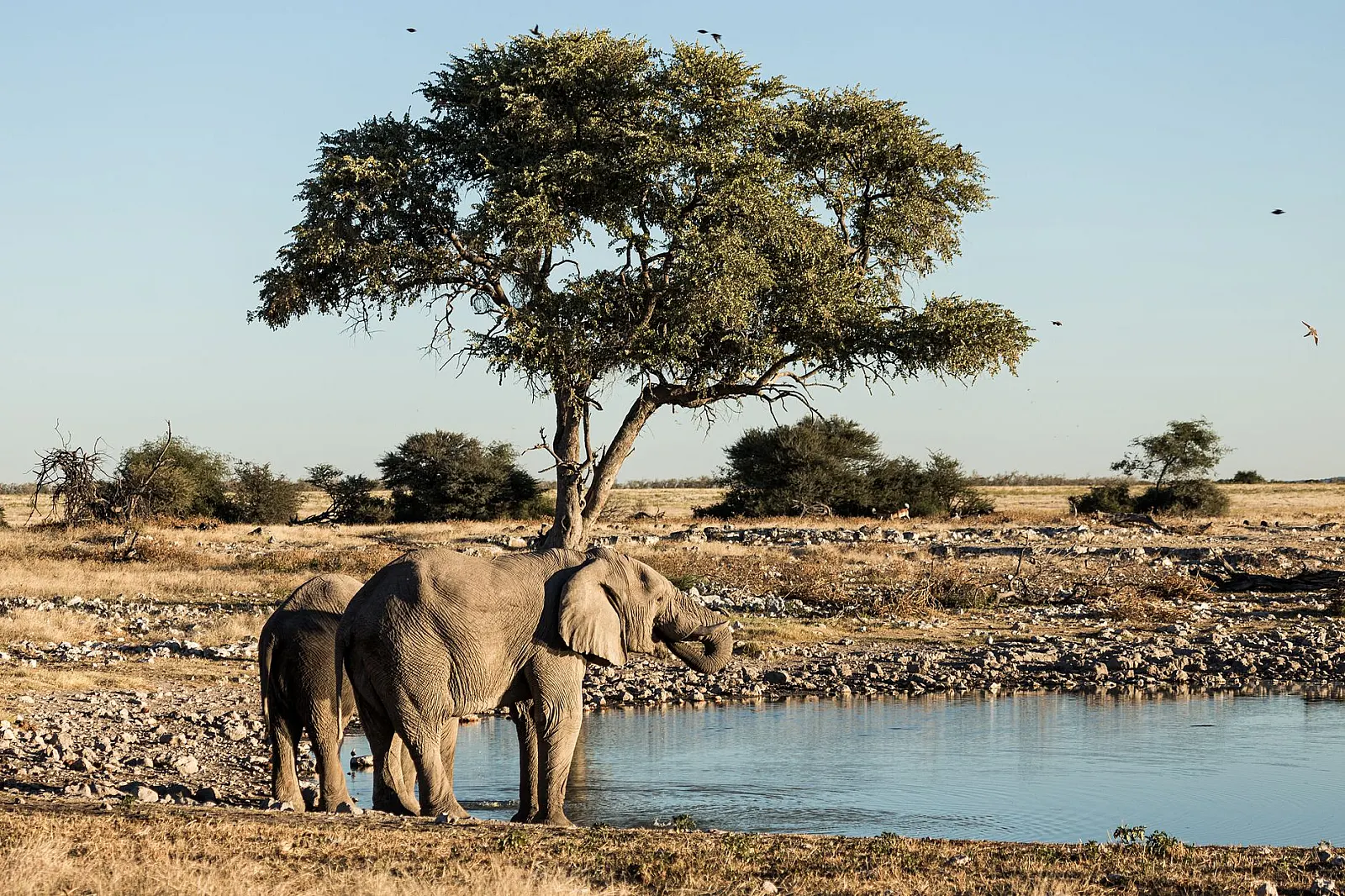
What does the green season offer instead?
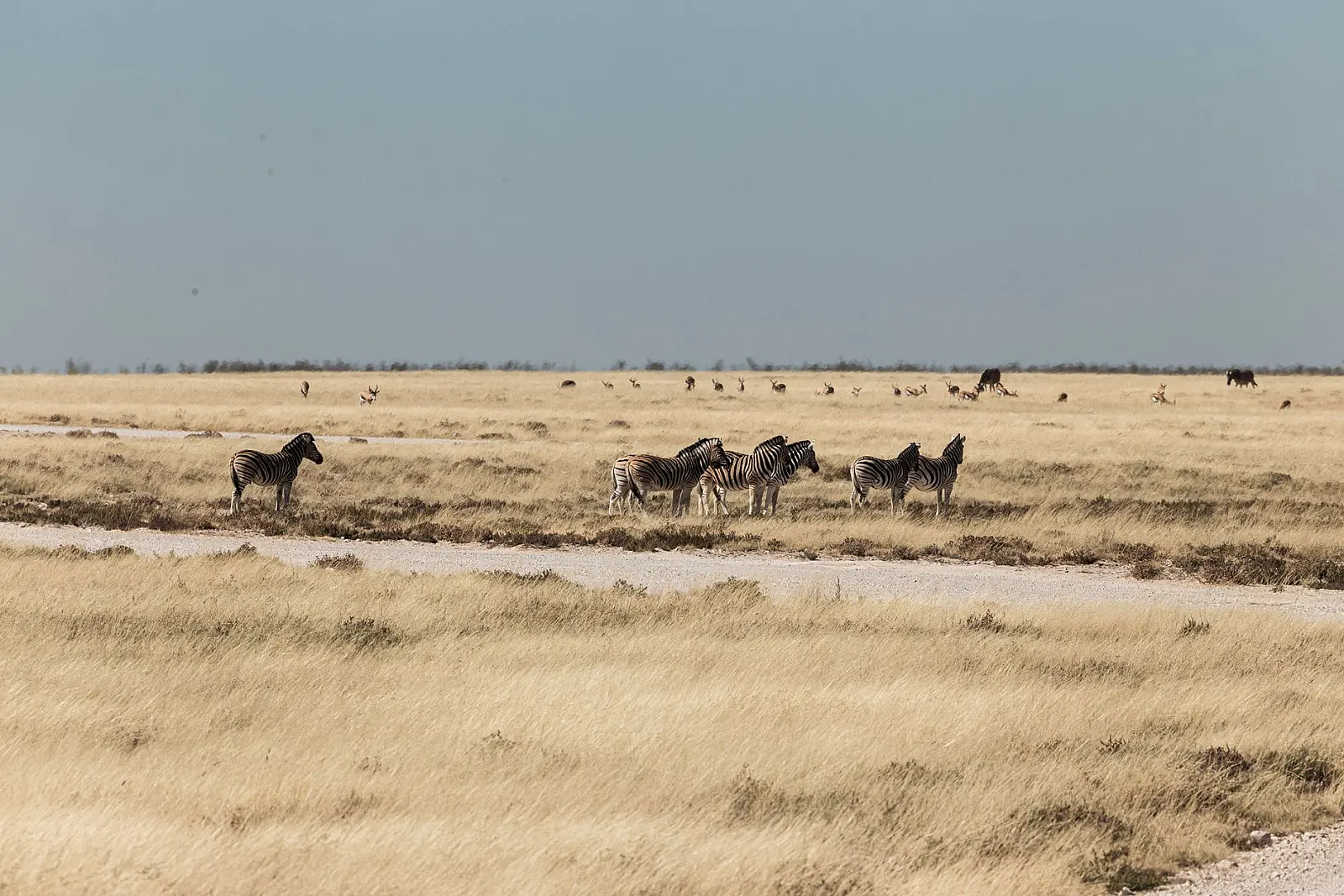
Three things worth knowing. In good rainfall years the Etosha Pan itself holds water and can attract large numbers of flamingos and pelicans, occasionally in breeding aggregations — a spectacle that simply does not exist in the dry season. Zebra and wildebeest move out onto the western plains. And the desert itself greens: the gravel plains of the Namib flush with grass, and in rare years enough rain falls in the Naukluft catchment for the Tsauchab River to reach Sossusvlei, filling the vlei — an event that draws photographers and cannot be predicted or booked.
Namibia month by month
| Month | Season | Game viewing | Crowds & price | Notable |
|---|---|---|---|---|
| January | Wet, hot | Weak in Etosha; game dispersed | Low inland; coast very busy | Peak Namibian/South African holiday season on the coast |
| February | Wet, hot | Weak | Low | Often wettest; northern gravel roads can wash out |
| March | Wet, easing | Fair | Low to moderate | Landscapes at their greenest |
| April | Drying, transitional | Good and improving | Shoulder — excellent value | Mild, clear, superb light |
| May | Dry, cooling | Very good | Rising | Grass drying back; visibility improves |
| June | Dry, cold nights | Very good | High | Sub-zero desert dawns |
| July | Dry, cold nights | Very good | Peak | Peak European season; book far ahead |
| August | Dry, windy inland | Excellent | Peak | Berg wind episodes can bring hot, dusty days on the coast |
| September | Dry, warming | Excellent | Peak | Best all-round month for most itineraries |
| October | Dry, hot | Best of the year at Etosha | High | 35–40°C; animals must drink daily |
| November | Hot; first rains possible | Very good early, declining late | Dropping | Migrant birds arriving |
| December | Early rains | Declining | Low inland; coast packed | Etosha greens up; springbok lambing |
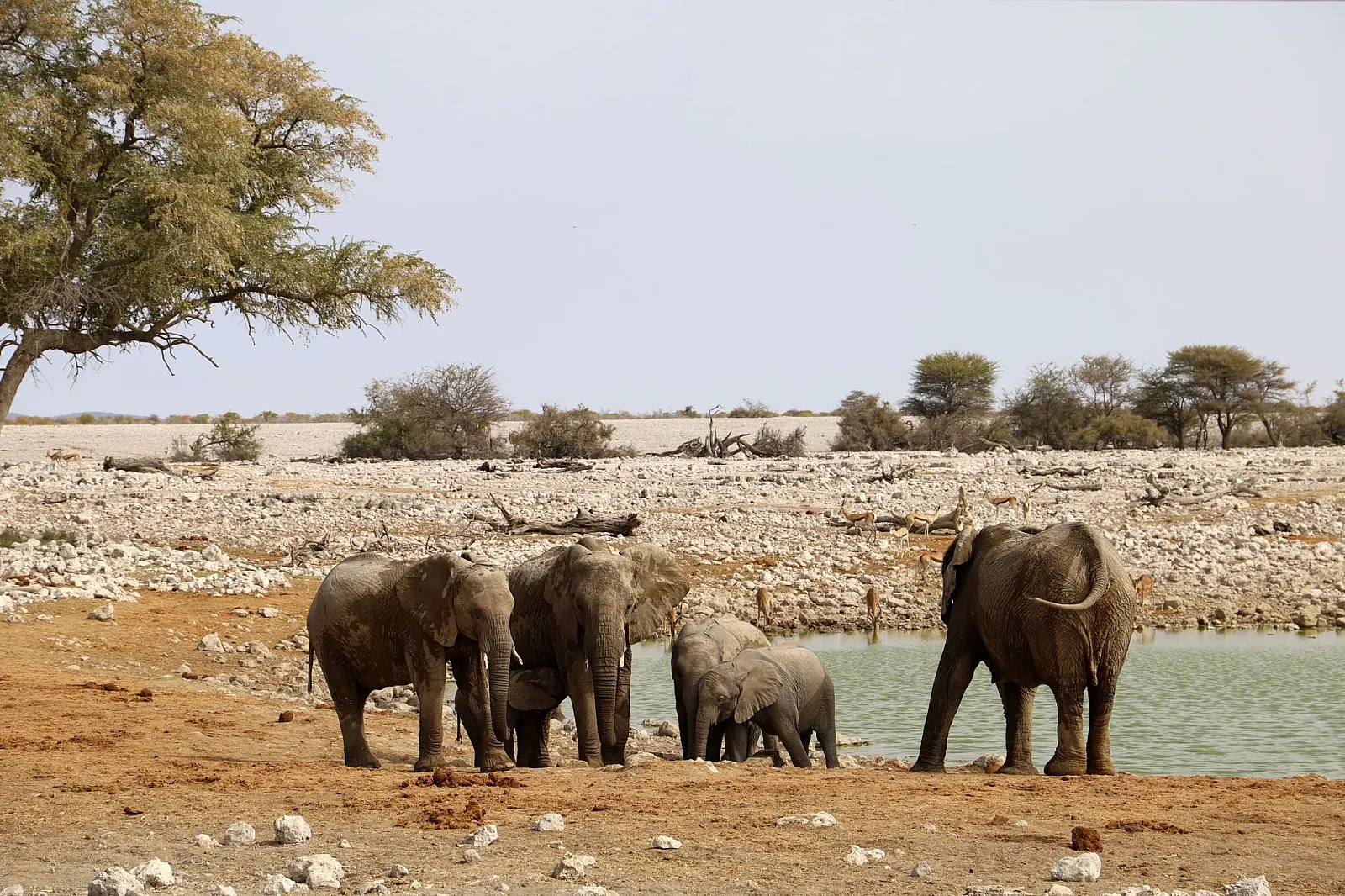
When is the best time for birding in Namibia?
Birding and big-game seasons are directly opposed here. The birding peak is November to April, when Palearctic and intra-African migrants arrive, the Zambezi Region floodplains and Etosha Pan hold water, and resident species breed. Walvis Bay lagoon and Sandwich Harbour are exceptions that work year-round as coastal wader and flamingo sites — a useful way to get serious birding into a dry-season itinerary without sacrificing Etosha.
What about the desert, Sossusvlei and the Skeleton Coast?
These are less season-dependent than the parks, but not season-neutral. April–May and September–October give the best combination of clear air, moderate daytime temperatures and low sun angles for dune photography. December to February brings extreme heat at Sossusvlei — often above 40°C by late morning, which compresses climbing and walking into a short dawn window. June and July are comfortable by day but genuinely cold at night, with sub-zero temperatures at desert camps. The coast is cool and foggy in any month.
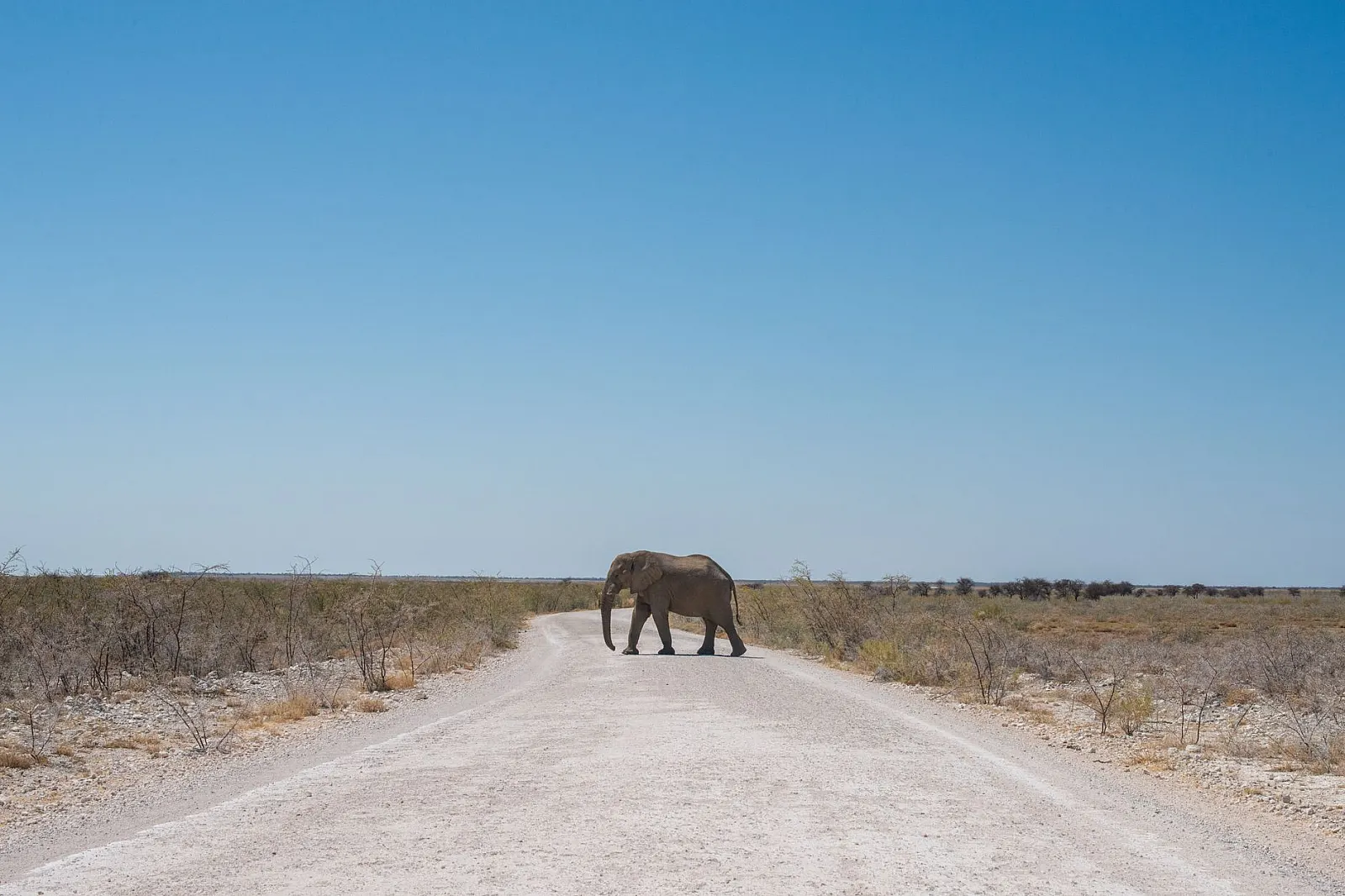
When should you NOT go on safari in Namibia?
January and February are the worst months for wildlife. Etosha's game is scattered, the grass is tall, heat is at its most punishing, and rain in the north can cut gravel roads and make river crossings impassable — a real risk on a self-drive itinerary, which is how most people travel in Namibia. If a reliable Big Five experience is your goal, these are the months to avoid.
There is a second, less obvious trap: the coast between mid-December and mid-January. This is the domestic and South African summer holiday, and Swakopmund and Walvis Bay are at their most crowded and expensive precisely when the interior is at its emptiest. Travellers who pick December for the low inland rates are often surprised by the coastal leg.
The fair counterargument for the green season: it is the cheapest period, the landscapes are transformed, the birding is at its best, and for photographers interested in dramatic skies over the Namib rather than in Etosha's waterholes, February can be the most rewarding month of the year. Just do not book it expecting the waterhole spectacle.