Safari Vaccinations: What the Official Sources Require
This is general information gathered from official sources, not medical advice. Vaccination needs depend on your health, age, medical history and exact itinerary. Consult a travel health professional, a yellow fever vaccination centre, or your own country's official travel health service — such as the CDC Yellow Book or the UK's NaTHNaC TravelHealthPro — well before you travel. Entry requirements are legal conditions set by governments and can change without notice.
Which safari countries legally require a yellow fever certificate?
This is the most misunderstood rule in safari travel, because two very different things get described with the same words. Under the International Health Regulations, a country can require proof of yellow fever vaccination in one of two ways:
- From all arrivals — everyone over the stated age needs a certificate, no matter where they flew in from.
- Only from arrivals from a country with risk of yellow fever transmission — most travellers arriving directly from Europe, North America or Australia need nothing at all.
Of the nine main safari countries, only Uganda requires a certificate from all arrivals. The other eight require one only if you are coming from, or in some cases transiting, a country WHO has determined to be at risk. The table below reflects WHO's Annex 1 country list dated 18 November 2022 (revised 3 January 2023), cross-checked against the UK NaTHNaC country pages as of September 2026.
| Country | Yellow fever risk in the country itself (WHO) | Certificate required from | Minimum age | Airport transit counts? |
|---|---|---|---|---|
| Uganda | Yes, throughout | All arrivals | 1 year | n/a — applies to everyone |
| Kenya | Yes, in parts | Arrivals from risk countries | 1 year | Not specified by WHO |
| Tanzania | No (low potential for exposure) | Arrivals from risk countries | 1 year | Yes, transit over 12 hours |
| Rwanda | No | Arrivals from risk countries | 1 year | Not specified by WHO |
| Zambia | No | Arrivals from risk countries | 1 year | Yes, transit over 12 hours |
| Zimbabwe | No | Arrivals from risk countries | 9 months | Yes, transit over 12 hours |
| Botswana | No | Arrivals from risk countries | 1 year | Yes — sources differ (see below) |
| Namibia | No | Arrivals from risk countries | 9 months | Yes, transit over 12 hours |
| South Africa | No | Arrivals from risk countries | 1 year | Yes, transit over 12 hours |
Note the detail in the final column — and one genuine conflict between official sources. WHO's Annex 1 footnote for Botswana says the requirement covers travellers who transited the airport of a risk country regardless of the duration of the transit. CDC's Botswana page instead states the vaccine is "required for travelers ≥1 year old; this includes >12-hour airport transits or layovers in countries with risk for YF virus transmission." We cannot resolve which is currently enforced. If you have any transit through a yellow fever risk country en route to Botswana, assume the stricter WHO reading and confirm with Botswanan immigration before travel.
Why does my route matter more than my destination?
Because the trigger is where you have been, not where you are going — and two facts turn that from trivia into a real problem. First, Kenya and Uganda are themselves on WHO's risk list. A combined Kenya-and-Tanzania trip, or a Uganda gorilla trek followed by a beach stay, means arriving in the second country from a risk country. Second, Ethiopia is also a risk country, and Addis Ababa is among the busiest safari connecting hubs. A long layover there can trigger the requirement for onward entry to Tanzania, Zambia, Zimbabwe, Namibia or South Africa.
The upshot: a direct flight from London or New York to Johannesburg or Dar es Salaam generally triggers no requirement, while the same holiday routed via Nairobi, Entebbe or Addis Ababa may. Check your actual ticket, connections included, against the WHO country list.
Is "not required" the same as "not recommended"?
No, and conflating the two is the second common error. A requirement is a legal entry condition; a recommendation is public health advice about protecting yourself from a disease that is actually present. They can point in opposite directions.
Kenya is the clearest example. For a traveller flying directly from the United States, CDC states the vaccine is "not required" — yet CDC separately states it is "recommended for all travelers ≥9 months old" for Kenya, excluding only Nairobi city, the former North Eastern Province counties and most former Coast Province counties. The classic Kenyan safari circuit therefore sits in an area where CDC recommends the vaccine even though no border official will ask for a certificate. Tanzania, by contrast, is a country where CDC says the vaccine is "generally not" recommended. Whether a recommendation applies to you is a clinical judgement — the vaccine carries real contraindications, discussed below — so it belongs in a conversation with a travel health professional.
What makes a yellow fever certificate valid?
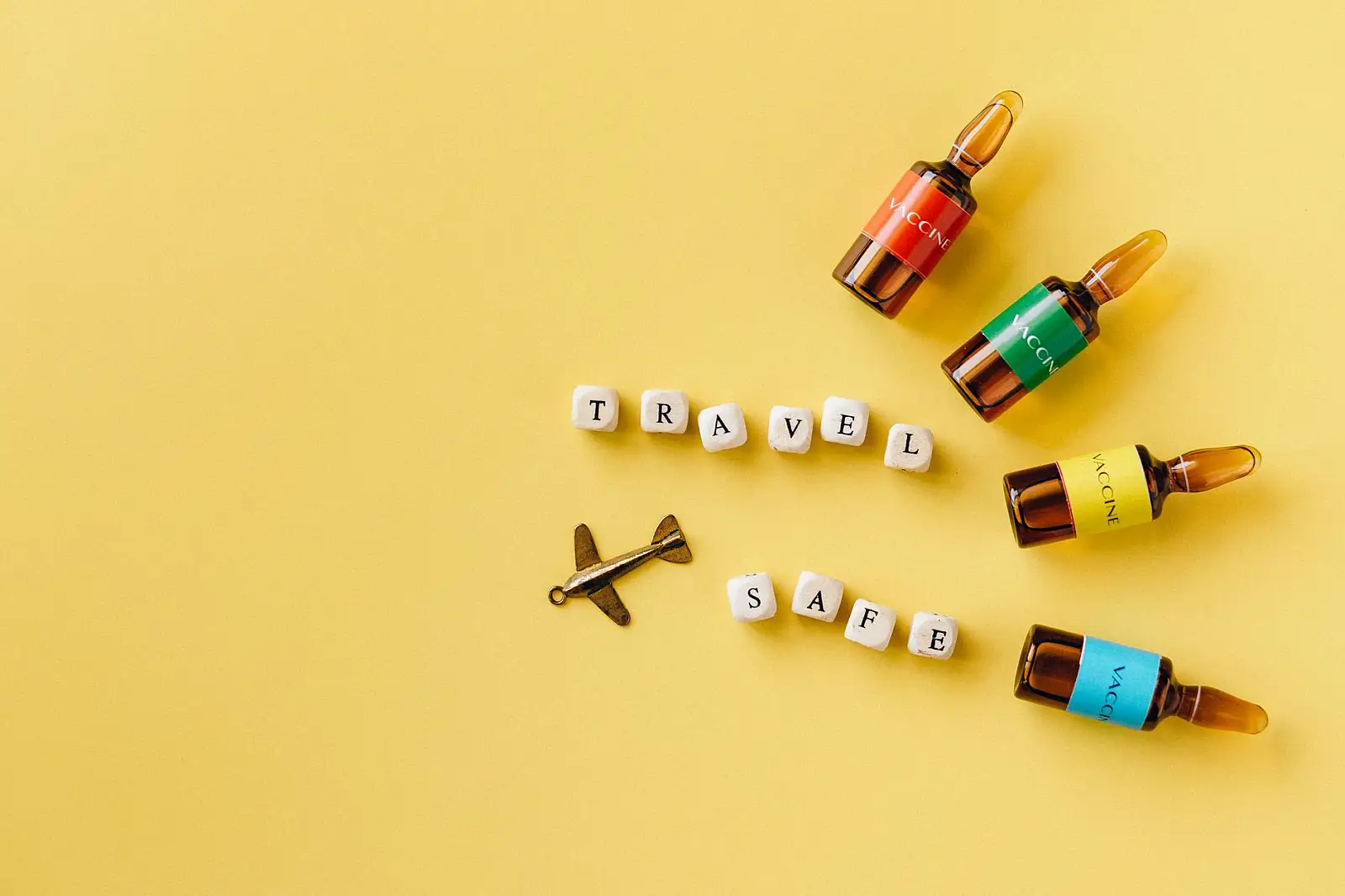
The document is the International Certificate of Vaccination or Prophylaxis (ICVP), the yellow booklet. Per the CDC Yellow Book, "a properly completed ICVP is valid beginning 10 days after the date of primary vaccination" — so leaving it to the last week before departure does not work.
Validity is now for life. Following an amendment to Annex 7 of the International Health Regulations, WHO records that from 11 July 2016 the period of validity changed from ten years to the life of the person vaccinated, that this applies to certificates issued before as well as after that date, and that "boosters or revaccination cannot be required." If a border official says a pre-2016 certificate has expired, that is contrary to the IHR.
Some people cannot receive the vaccine. CDC lists contraindications including age under 6 months, thymus disorders and severe immunodeficiency, and precautions including age 6–8 months or 60 and over, pregnancy and breastfeeding. For those travellers CDC describes a medical waiver process, in which a clinician completes the contraindications section of the ICVP and provides a signed waiver letter on letterhead. Whether a waiver is accepted at a given border is at that country's discretion — a discussion for a yellow fever vaccination centre, not the airport.
What other vaccinations do CDC and WHO list for safari travel?
Separate from legal entry requirements, official sources publish recommendations. No country will stop you at the border over these. CDC's destination pages group them as follows.
Routine vaccines, which CDC advises are up to date for all international travellers: measles-mumps-rubella, diphtheria-tetanus-pertussis, polio, chickenpox, influenza, shingles and COVID-19. CDC states that all international travellers should be fully vaccinated with MMR.
Destination-specific vaccines commonly listed for safari countries include hepatitis A, hepatitis B, typhoid and rabies. The wording differs by country: for Tanzania, CDC describes typhoid as "recommended for most travelers", while for Botswana it frames typhoid around rural travel, longer stays or visiting friends and relatives. On rabies, CDC notes that dogs infected with rabies are commonly found in Botswana. Cholera and polio boosters appear for some countries and not others.
Because these lists are country-specific and change, check your own itinerary on CDC Travelers' Health and NaTHNaC country pages, and take it to a travel clinic six to eight weeks before departure — several of these vaccines need more than one dose.
Where should I verify this before I travel?
Requirements are legal conditions and they change. NaTHNaC published a notice on 10 September 2025 confirming that some countries had altered their certificate requirements since the last WHO update, and that changes would appear on its country pages only once verified. Treat any table — including this one — as a starting point, and confirm with the destination's immigration authority or embassy and your national travel health service before booking.