Best Time to Go on Safari in Botswana
Last reviewed 13 September 2026. Flood extent varies enormously between years; the months below are averages, not forecasts.
When is the best time to go on safari in Botswana?
May to October, with the core of it July to September. Local rain has stopped, the bush thins, and — the crucial part — the Okavango Delta is full. October delivers the most concentrated game viewing of the year but at 40°C or more. December to April inverts the advice entirely if your destination is the Kalahari rather than the Delta.
Why is the Okavango Delta flooded during the dry season?
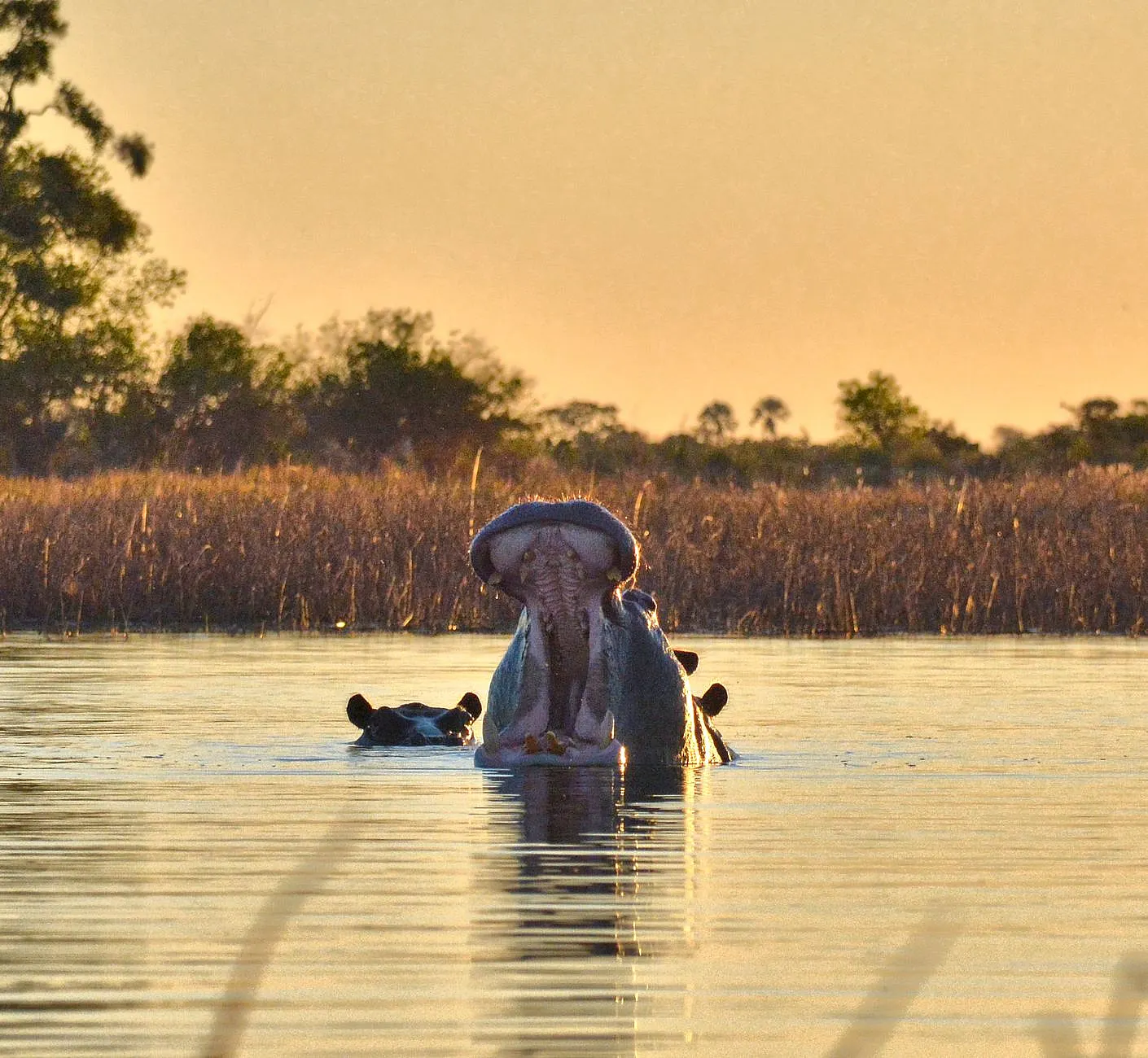
This is the fact most safari pages get wrong, and it is worth being precise about. The water in the Okavango Delta is not Botswana's rain. It falls in the Angolan Highlands, some 600 km upstream, in a wet season running roughly September to April and peaking in January (Angolan Highlands Water Tower precipitation budget, 2023, which puts mean annual precipitation over the catchment at about 1,112 mm).
That water then takes months to arrive. Extensive Angolan peatlands buffer the flow, the Delta's gradient is almost flat, and the flood propagates slowly through a vast network of channels and floodplains. The result: floodwater generally enters the Panhandle around March to June and the Delta reaches its maximum inundation extent in roughly July to September — six to eight months after the rainfall season that produced it, and squarely in the middle of Botswana's own dry season.
So the Delta is at its wettest when Botswana is at its driest. That is why mokoro and boating are dry-season activities here and not green-season ones, and why some water-based Delta camps are effectively seasonal. Inundation extent is highly variable — from roughly 3,000–5,000 km² at low water to 6,000–12,000 km² at flood crest, depending on the year (Ramsar Site 879, Okavango Delta System). Local rain contributes under 10% of the Delta's water budget.
What are Botswana's seasons?
Botswana Tourism Organisation describes a semi-arid climate with four practical periods: summer rains November to March, with January and February as the peak rain months; winter dry season May to August, sunny and warm by day but with frost and sub-zero nights; and dry transitional periods in April to early May and September to October. Rainfall falls steeply across the country — over 650 mm in north-eastern Chobe District down to under 250 mm in south-western Kgalagadi.
What does each season mean for game viewing?
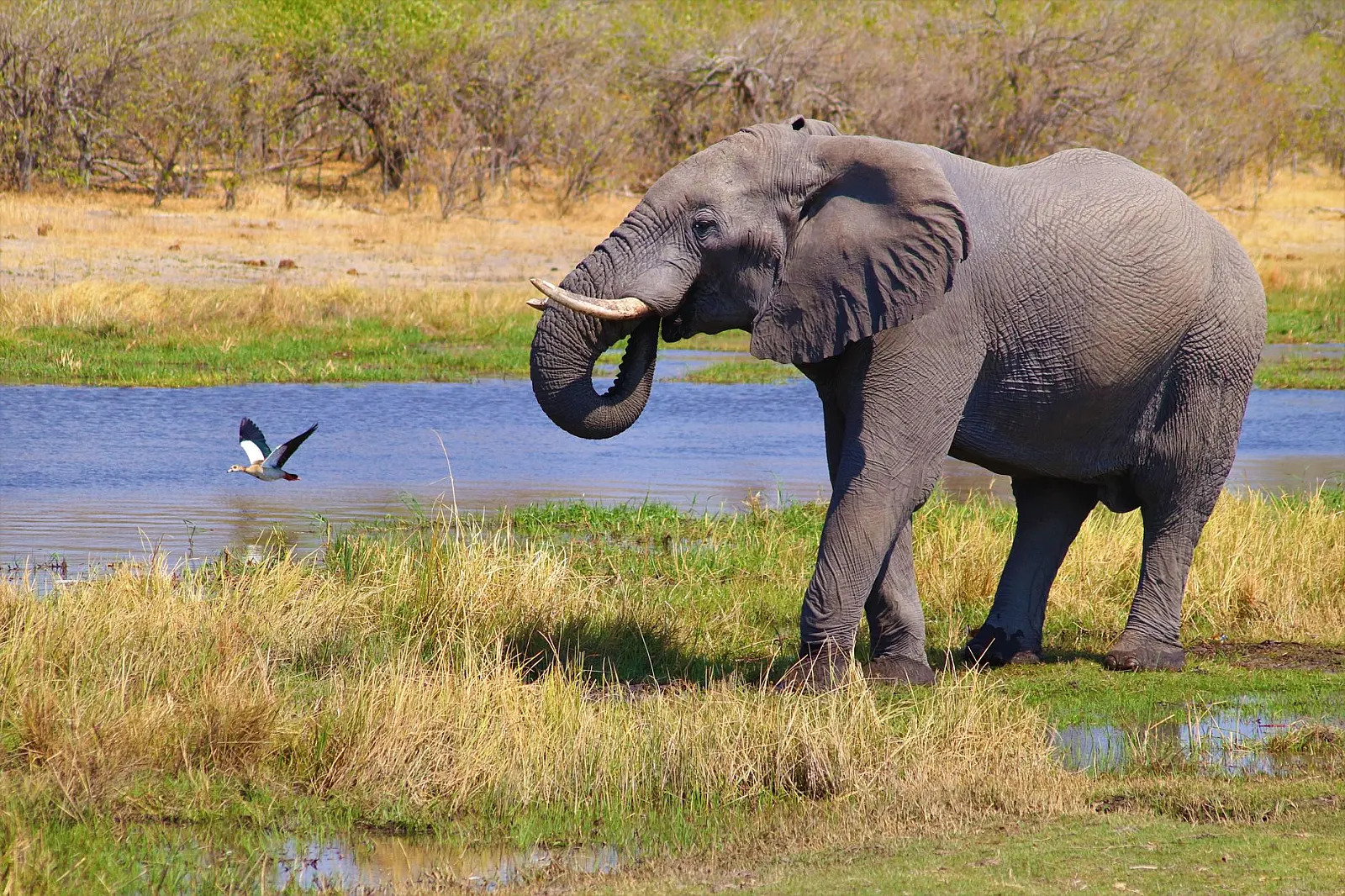
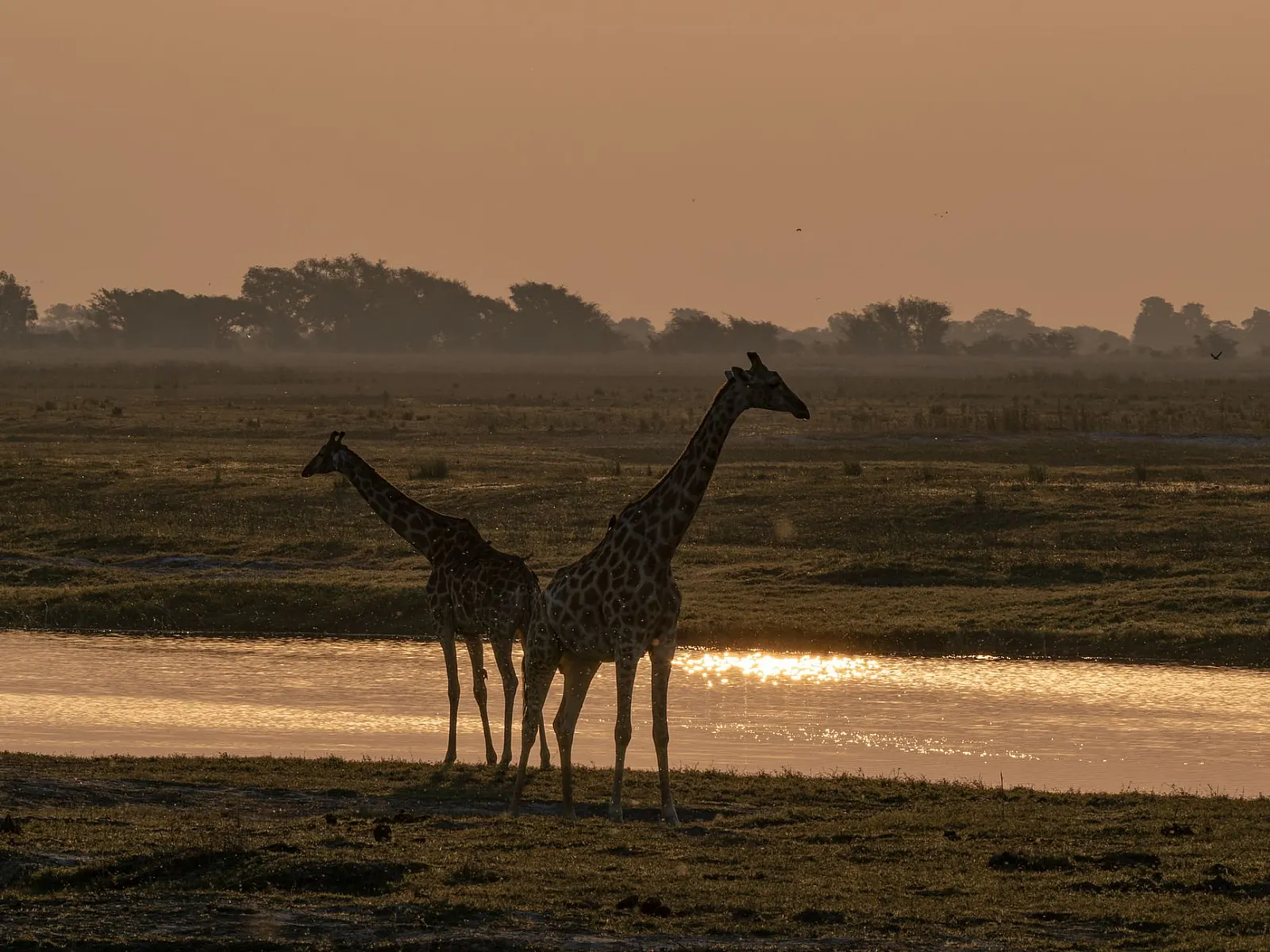
Dry season (May–Oct). The interior dries out, seasonal pans empty, and game commits to permanent water: the Delta channels, the Khwai and Linyanti, and above all the Chobe riverfront, where tens of thousands of elephants converge. Grass is low, tracks are firm, and off-road access opens up on the private concessions. By September and October animals must drink daily, which makes sightings close to predictable.
Green season (Nov–Apr). Rain fills pans across the interior, game disperses widely, grass grows tall, and black-cotton sections become boggy. In the Delta this is the weakest period for classic land-based game viewing, and — counterintuitively — also the period when delta water levels are lowest. Some camps close. But in the Kalahari it is the best time of the year.
Botswana safari month by month
| Month | Season | Game viewing | Crowds & price | Notable |
|---|---|---|---|---|
| January | Peak rain | Weak in Delta/Chobe; excellent in Kalahari | Lowest | Zebra on Makgadikgadi/Nxai; flamingos on the pans |
| February | Peak rain | Same | Lowest | Wettest month; some Delta camps close |
| March | Rain easing | Improving | Low | Floodwater usually reaching the Panhandle |
| April | Transition, drying | Good | Shoulder — strong value | Flood advancing south through the Delta |
| May | Dry, cooling | Very good | Rising | Mokoro water returning; cold nights begin |
| June | Dry, cold | Very good | High | Sub-zero dawns; flood spreading |
| July | Dry, cold | Excellent | Peak | Flood at or near peak; water activities best |
| August | Dry, warming | Excellent | Peak | Chobe elephant numbers building |
| September | Dry, hot | Excellent | Peak | Water most concentrated |
| October | Dry, very hot | Outstanding — but 40°C+ | High | Chobe riverfront peak; Delta receding |
| November | First rains | Declining quickly | Dropping | Zebra head for the Kalahari; impala lambing |
| December | Rain | Fair in Delta; good in Kalahari | Low outside holidays | Green season rates |
When is the best time for the Kalahari and the salt pans?
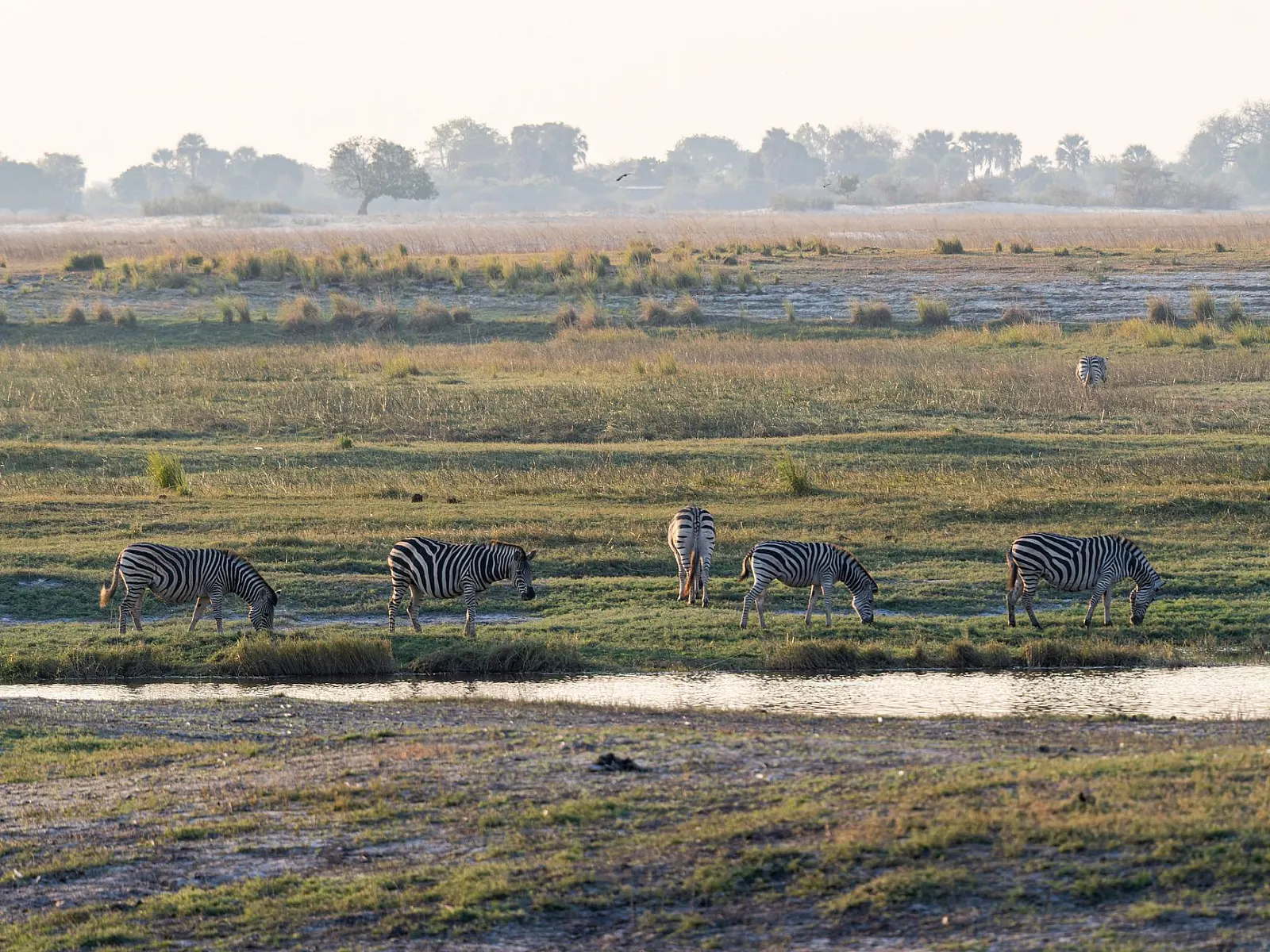
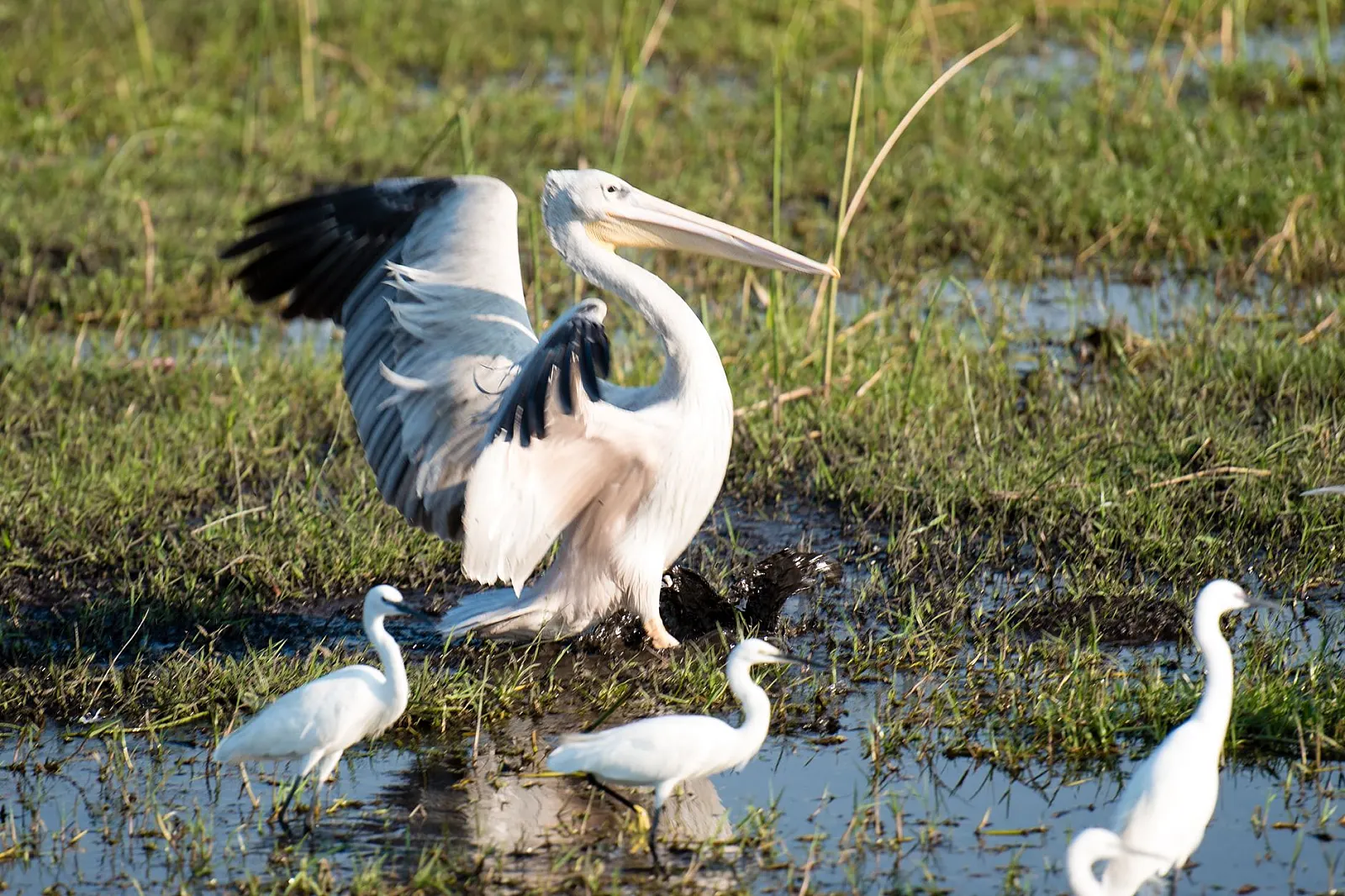
Exactly opposite to the Delta. The Central Kalahari, Makgadikgadi Pans and Nxai Pan are at their best December to April. Summer rain greens the fossil river valleys, zebra move onto the Makgadikgadi grasslands in one of Africa's longer terrestrial migrations, predators follow, and Sua and Nata pans can hold enough water for large flamingo and pelican gatherings. In the dry season the Kalahari is harsh and game is sparse. A well-designed Botswana itinerary in February is a Kalahari itinerary; in August it is a Delta and Chobe itinerary.
When is the best time for birding in Botswana?
Birding peaks November to March, when intra-African and Palearctic migrants arrive, herons and storks breed in Delta heronries, and the pans flood. The two calendars conflict directly: the best birding months are the weakest big-game months in the Delta. The usual compromise is late November or early December, or a green-season trip weighted to the Kalahari and pans where both interests are served.
When should you NOT go on safari in Botswana?
January and February are the worst months for a first Botswana safari built around the Okavango Delta and Chobe. Rain is at its heaviest, grass is at its tallest, game is dispersed across flooded interior pans, black-cotton tracks bog down, and Delta water levels are at their annual low — so you get neither good driving nor good boating. Some camps close. Daytime heat combines with high humidity.
That said, the same two months are among the best of the year for the Kalahari and the pans, so "don't go to Botswana in February" is wrong advice. "Don't go to the Delta in February expecting classic game viewing" is right.
The other honest warning is about cost, not weather. July to October in Botswana is the most expensive mainstream safari market in Africa, driven by a deliberate low-volume, high-value policy. If budget is the binding constraint, April, May and November offer conditions far closer to peak season than the price difference suggests — and are a better trade than forcing a cheap January trip.
Finally, October is a genuine trade-off month, not a straightforward best. Game viewing is the most concentrated of the year, but temperatures routinely exceed 40°C and midday activity ceases. Travellers who dislike heat should take September.