Safari Safety: Wildlife, Vehicles and Camps
This is general information gathered from official sources, not medical or safety advice. Park rules differ by reserve and change; the instructions of your guide, ranger or camp management always take priority over anything written here. The sections on heat, dehydration and insect-borne illness are general information only — consult a travel health professional or your own country's official travel health service.
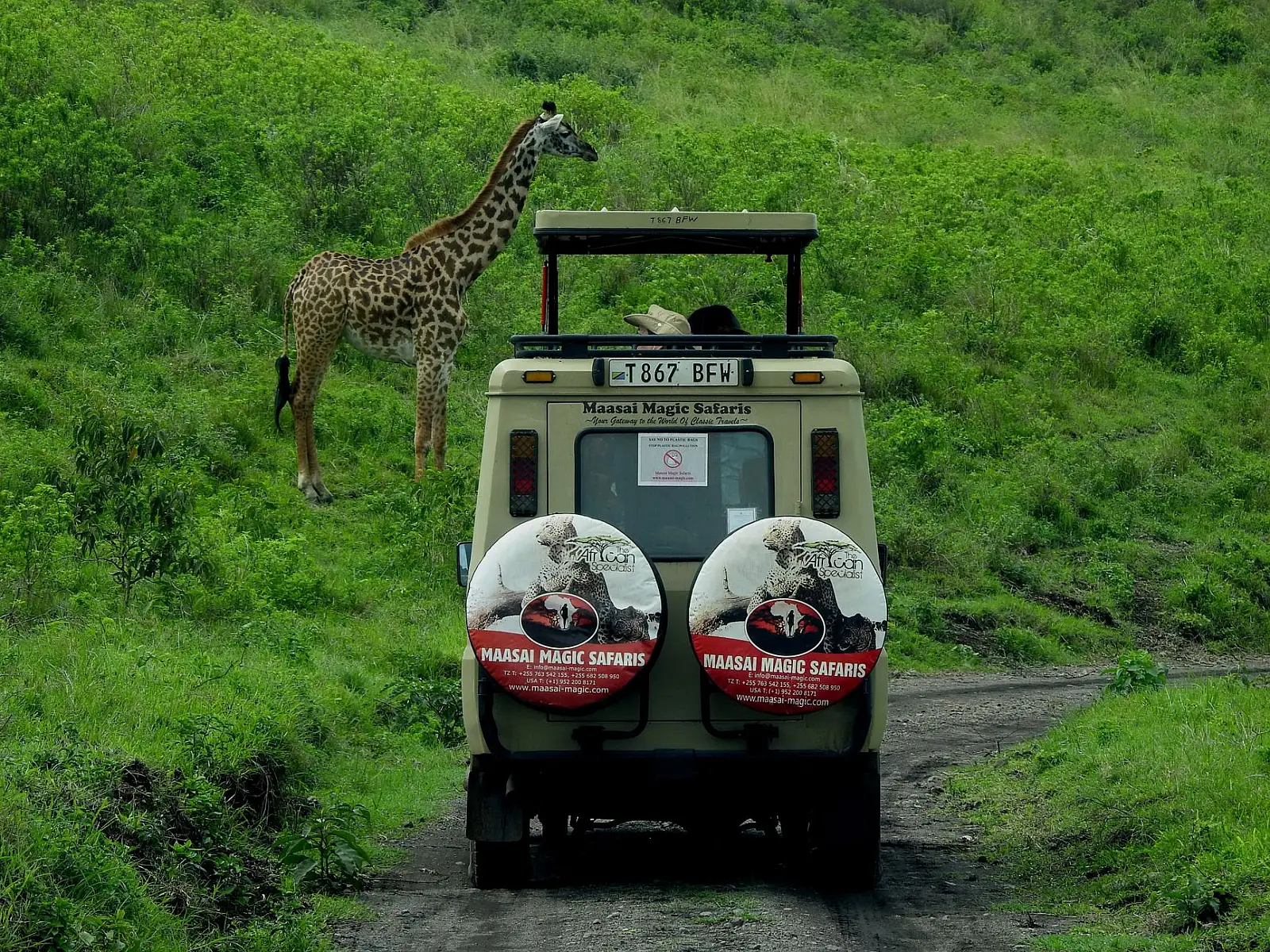
Why must you stay in the vehicle?
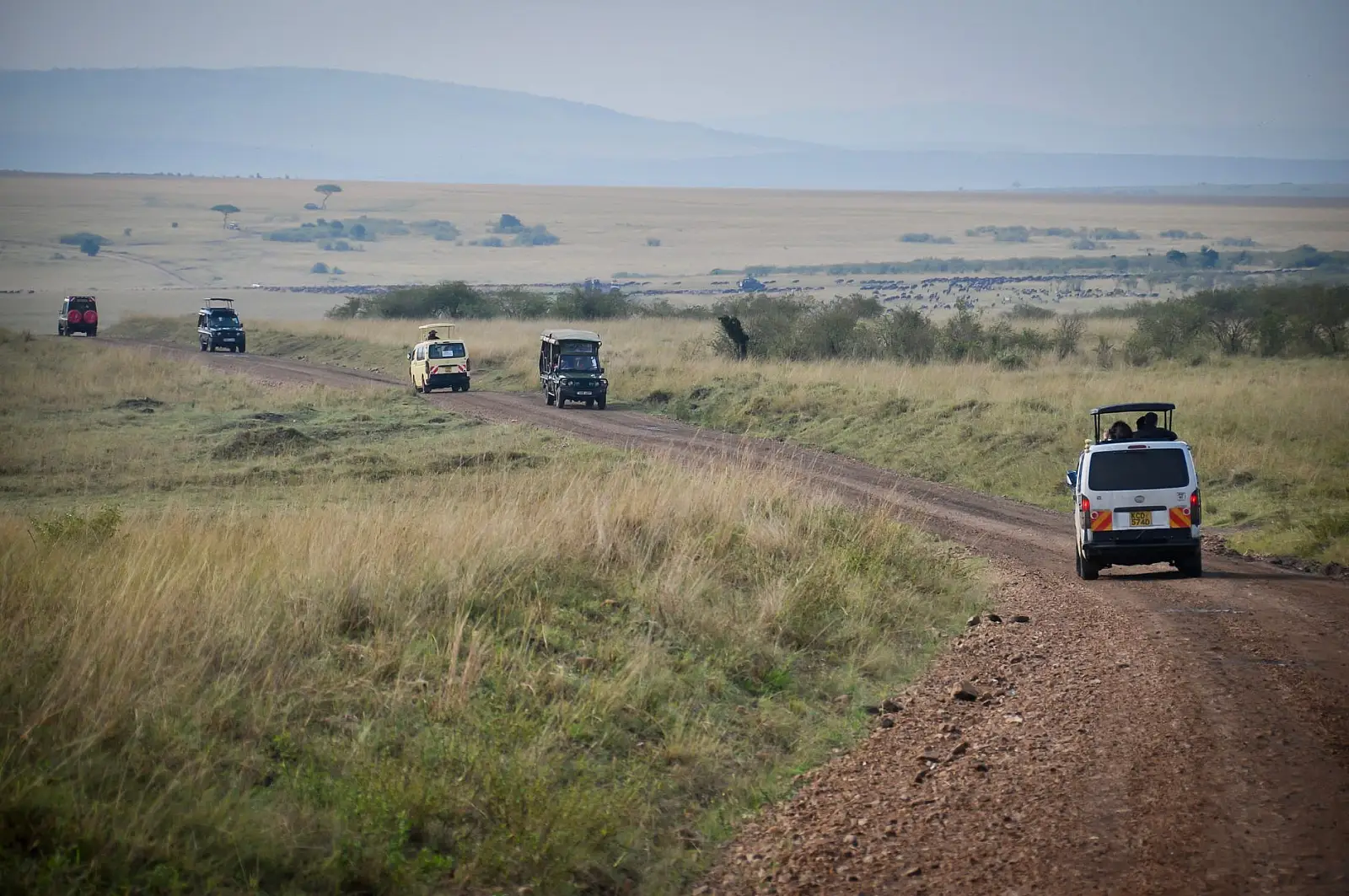
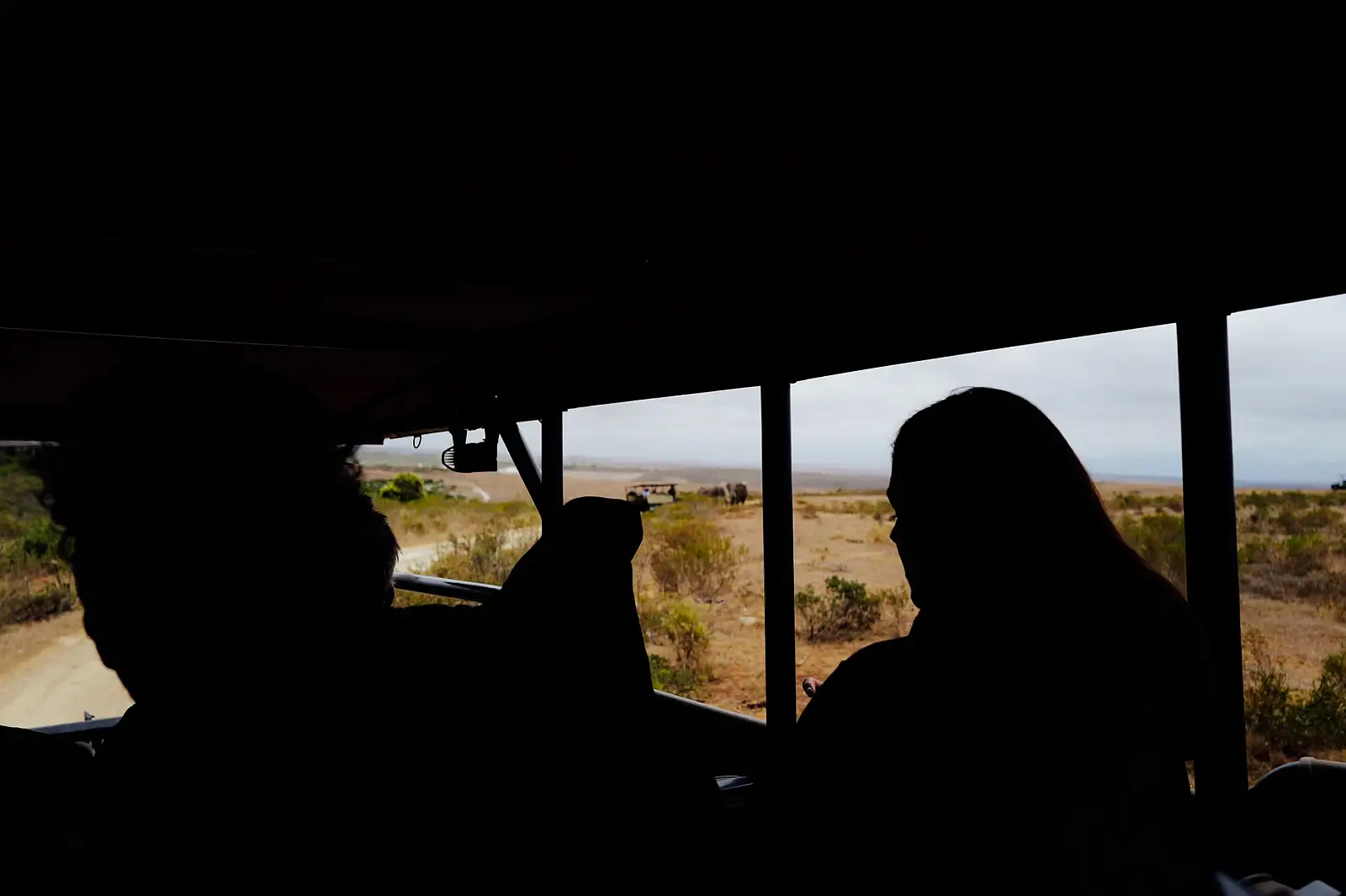
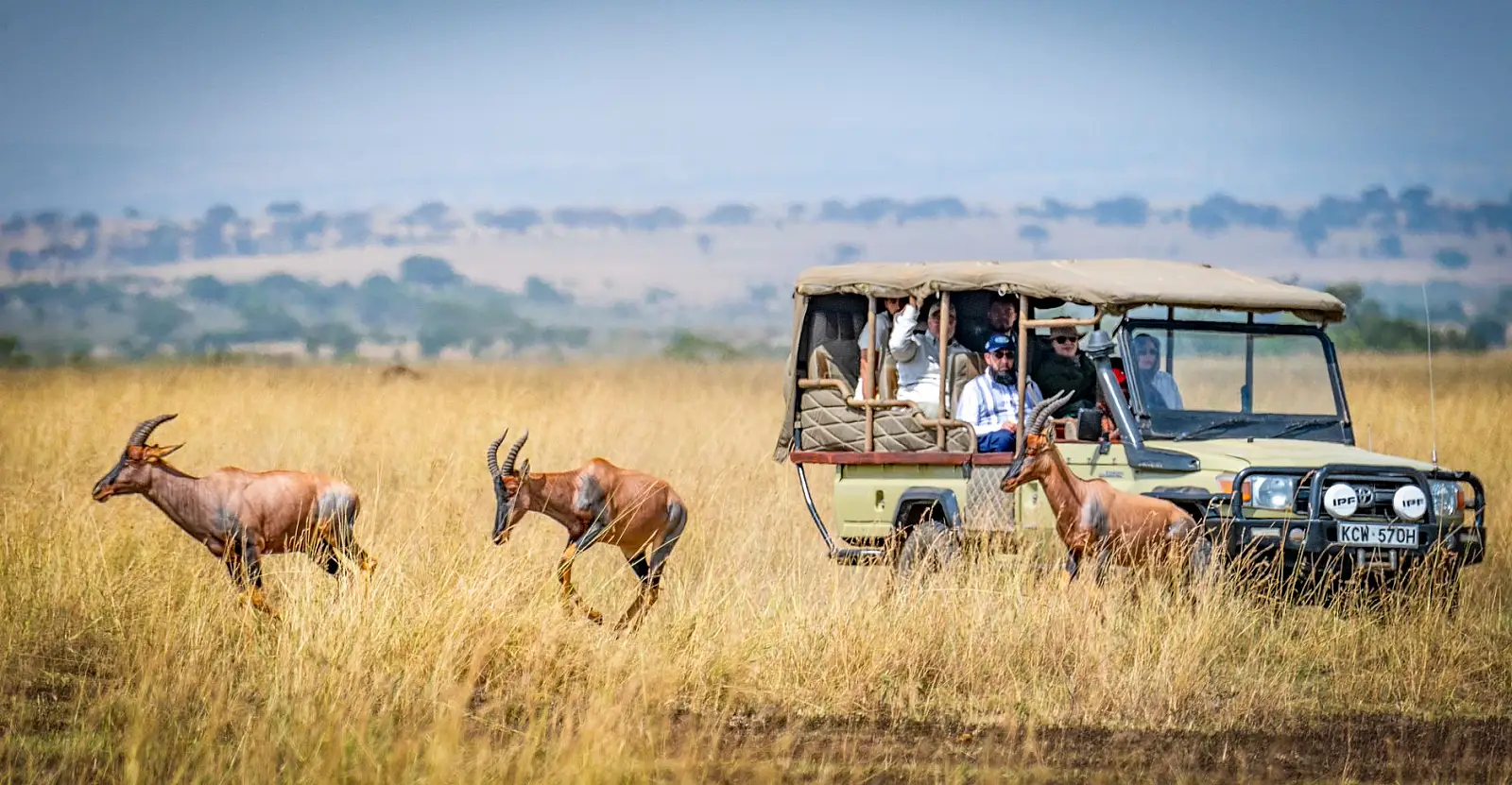
Because it is both a rule and, statistically, the thing that keeps you safe. SANParks states it plainly: "guests may only alight from vehicles in designated areas. No part of your body may protrude from a window or sunroof and doors should remain closed at all times." The Kenya Wildlife Service requires the same and sets a minimum viewing distance of 20 metres. In Zimbabwe it is statute: Statutory Instrument 362 of 1990 lets the Director "prohibit any person from leaving a vehicle or riding on its exterior", permitting alighting only "in the event of an emergency, the onus of proof whereof shall lie upon such person." A better photograph is not an emergency.
The evidence is unusually clear. The only systematic study of the question — Durrheim and Leggat's ten-year review of South African records in the Journal of Travel Medicine (1999) — found seven tourists killed and 14 non-fatally attacked by wild mammals across the decade. Of those 21 incidents, exactly one happened to someone inside a vehicle. Attacks were "an uncommon cause of injury and death", but several were attributed to "tourist ignorance of animal behavior and flagrant disregard of rules."
Two rules follow. If you break down, SANParks advises that you "remain in your vehicle – it is the safest place." And gate times are not a formality: Kruger states "no travelling before or after these times are allowed", with fines for latecomers.
How do unfenced camps work?
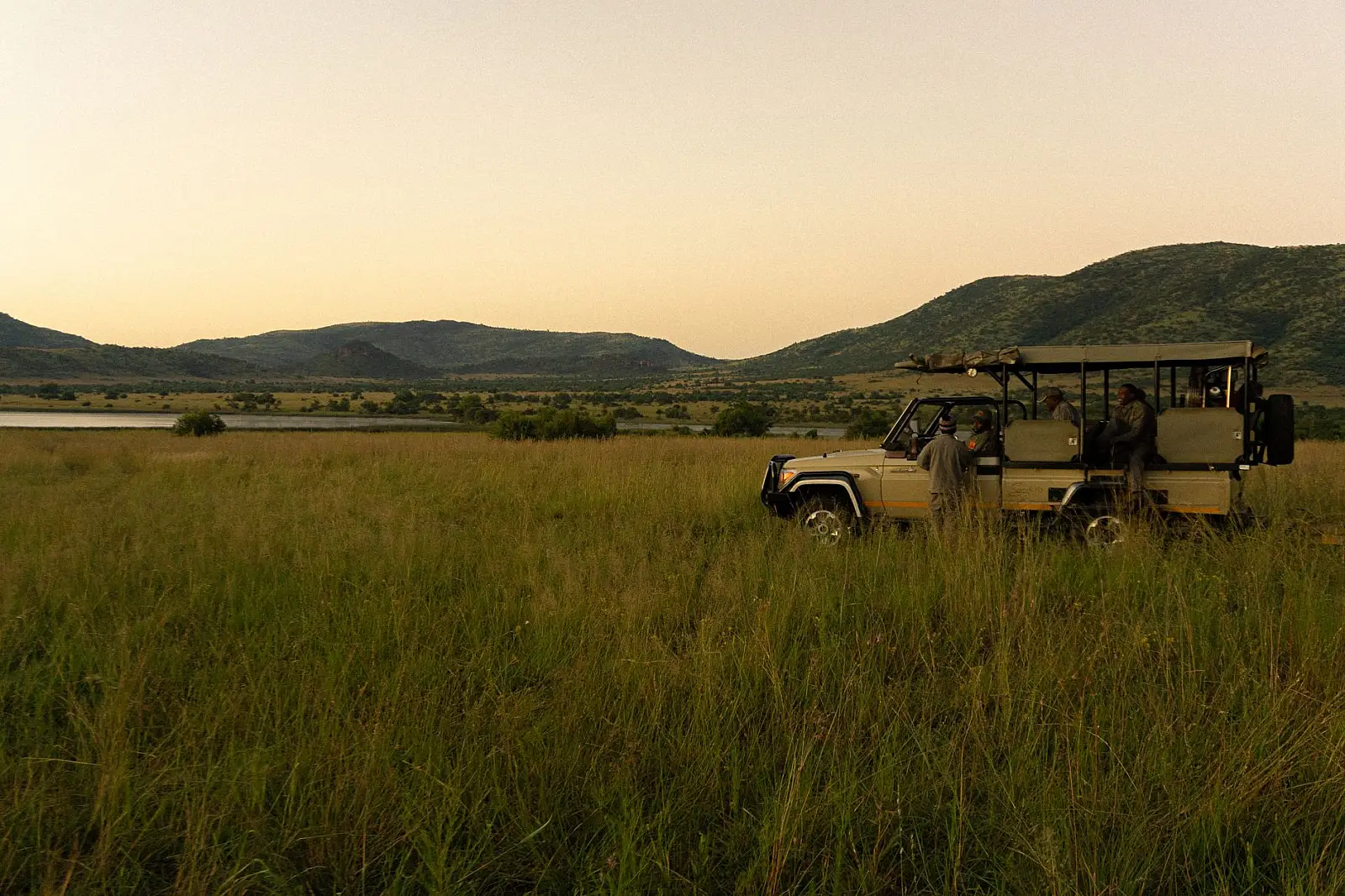
Many of the best camps have no perimeter fence, so animals move through them. The Botswana Tourism Organisation sets out the rules:
- "Always sleep in your tent, roof tent or vehicle. Make sure your tent zips up well."
- "Don't sleep with legs or arms protruding from the tent."
- "Don't sleep on bridges or animal paths, particularly those of elephants and hippos."
- "Children must be constantly supervised… Never allow children to nap on the ground or in the open."
- "Don't stray far from the campsite, or walk in the bush, unless with a qualified guide."
SANParks restricts its unfenced Kgalagadi camps to guests aged 12 and over, and notes that "as outdoor lighting in camps is limited, a torch/headlamp is required when walking outside at night." The convention that a guard escorts you between tent and dining area after dark is near-universal, but it is industry practice rather than published regulation — we found no park authority stating it as a rule. Follow it anyway, and if no escort is offered, ask.
What should you know about walking safaris?
Walking is where the risk profile genuinely changes, which is why it is tightly regulated. In Zimbabwe, SI 362 of 1990 provides that "no person shall enter or leave an area of the Parks and Wild Life Estate on foot" except on a prescribed road without written permission. Guide qualification is the other control: under the Field Guides Association of Southern Africa framework, a Trails Guide is "qualified to function as 2nd or 1st Rifle on trails or walks in areas where free-roaming dangerous game occur", holds an Advanced Rifle Handling certificate renewed every three years, and logs roughly 100 hours and 40 dangerous-game encounters before qualifying.
The FCDO warns that "safety standards in Zimbabwe's safari lodges and game reserves vary… Animal attacks have injured and killed visitors." Durrheim and Leggat recommend demanding "adequately trained and experienced game rangers when embarking on walking trails" — so ask what qualification your guide holds. Group sizes are commonly capped at six to eight guests, but we could not verify that against any published law; treat it as convention, not a legal limit.
How close is too close to elephants and hippos?
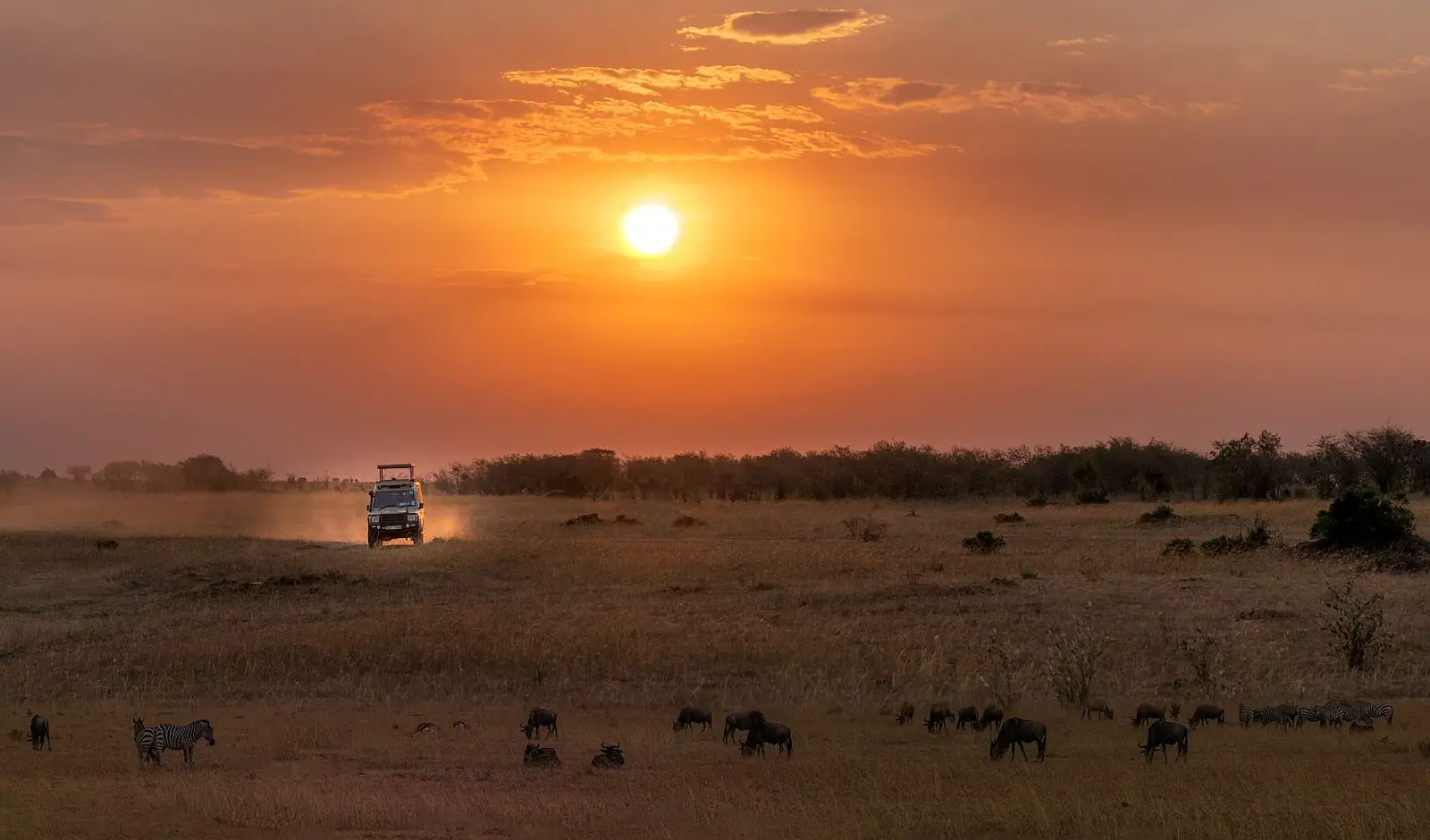
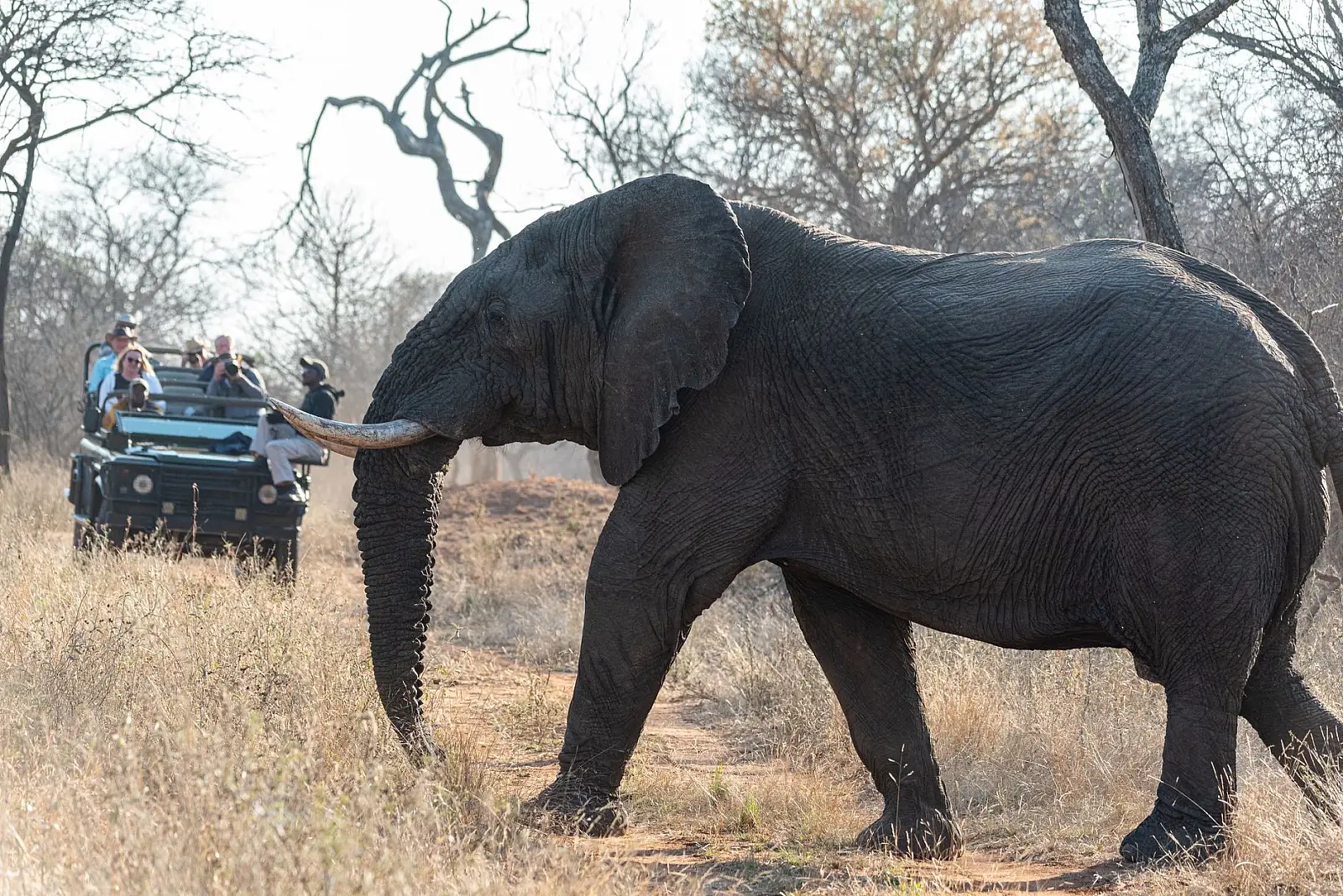
No park authority publishes an elephant-specific vehicle distance; KWS's 20 metres is a general wildlife rule. What SANParks does publish is behavioural guidance: "Females may… be aggressive when young calves are present and bulls can be exceptionally aggressive during musth. All elephants may become aggressive when sick, injured or harassed." On charging: "Most charges are mock charges which are broken off before the target is reached. However if an attack is followed through, an elephant is quite capable of killing… humans or wrecking cars." The threat display it describes is ears spread, head and tusks raised, head-shaking and trunk-swishing.
You will read confidently online that ears-forward means bluff, ears-back means a real charge, and that genuine charges are silent. We could find no credible source for this. Treat every charge as real and defer to your guide.
Hippos deserve accuracy rather than folklore. The much-repeated claim that they kill around 500 people a year traces, through the medical literature, to a general encyclopedia list citing no data — the authors of the paper usually credited with it state that the mortality rate "is unknown". A 2022 review in Frontiers in Conservation Science notes that "very few data support" the claim that hippos kill more people than any other African animal. What is well supported is that attacks, when they happen, are unusually lethal.
The useful facts come from the IUCN SSC Hippo Specialist Group: hippos "leave wallow or pool soon after sunset and spend night hours grazing", ranging about 3.5 km from water, and territorial males "defend territories only in the water". On land, most incidents appear to be accidental close-quarters encounters — which is why you do not walk to your tent unescorted, and why Botswana's guidance says not to camp on hippo paths. Never swim: the FCDO advises against bathing in rivers and lakes in Botswana, and notes swimming in them is illegal in Kenya's national parks.
How do you handle sun, heat and dehydration?
The CDC Yellow Book advises avoiding direct sun between 10am and 4pm, using broad-spectrum SPF 30 or higher reapplied every two to four hours, and wearing a hat with a brim at least three inches wide — "do not rely on standard baseball caps." WHO notes shade can feel 10–15°C cooler than direct sun and suggests drinking around 2–3 litres a day. One detail people get backwards: CDC advises applying sunscreen first, then insect repellent at least 15 minutes later, because DEET over sunscreen cuts its SPF by about a third. Heat stroke is a medical emergency — CDC describes a field diagnosis as body temperature at or above 41°C with marked alteration of mental status.
Are tsetse flies a real risk?
A small one, worth understanding rather than fearing. CDC advises "long-sleeved shirts and long pants that are neutral-colored because tsetse flies are attracted to bright or dark colors, particularly blue and black", noting they "can bite through lightweight clothing, so medium-weight clothing provides better protection." Critically, and contrary to most travel advice, CDC states that "permethrin-impregnated clothing and insect repellent have not been proven to be effective against tsetse flies." Your repellent is for mosquitoes.
On scale: a WHO-authored review in PLoS Neglected Tropical Diseases identified 35 traveller cases of the acute form worldwide across 2011–2020, linked to parks including South Luangwa, Serengeti, Murchison Falls, Masai Mara and Mana Pools — rare, but it progresses fast, so report any fever after safari promptly.
What is actually the most dangerous part of a safari?
The driving. WHO data for 2021 put road deaths per 100,000 at 29.9 in Zimbabwe, 28.2 in Kenya, 24.5 in South Africa and 22.0 in Namibia, against 2.4 in the UK. WHO notes a seat belt "can reduce the risk of death among vehicle occupants by up to 50%", and CDC warns that "trauma centers capable of providing care for serious injuries are uncommon outside urban areas." Night driving draws the sharpest warnings: the US State Department bars its Uganda embassy staff from driving after dark outside cities. No authority regulates open-sided game viewers; where your vehicle has belts, use them.