 SafariRoamer
Kgalagadi Transfrontier Park: Camps, 4x4 Rules, Borders and Fees
Last reviewed 2 November 2026.
What this guide covers
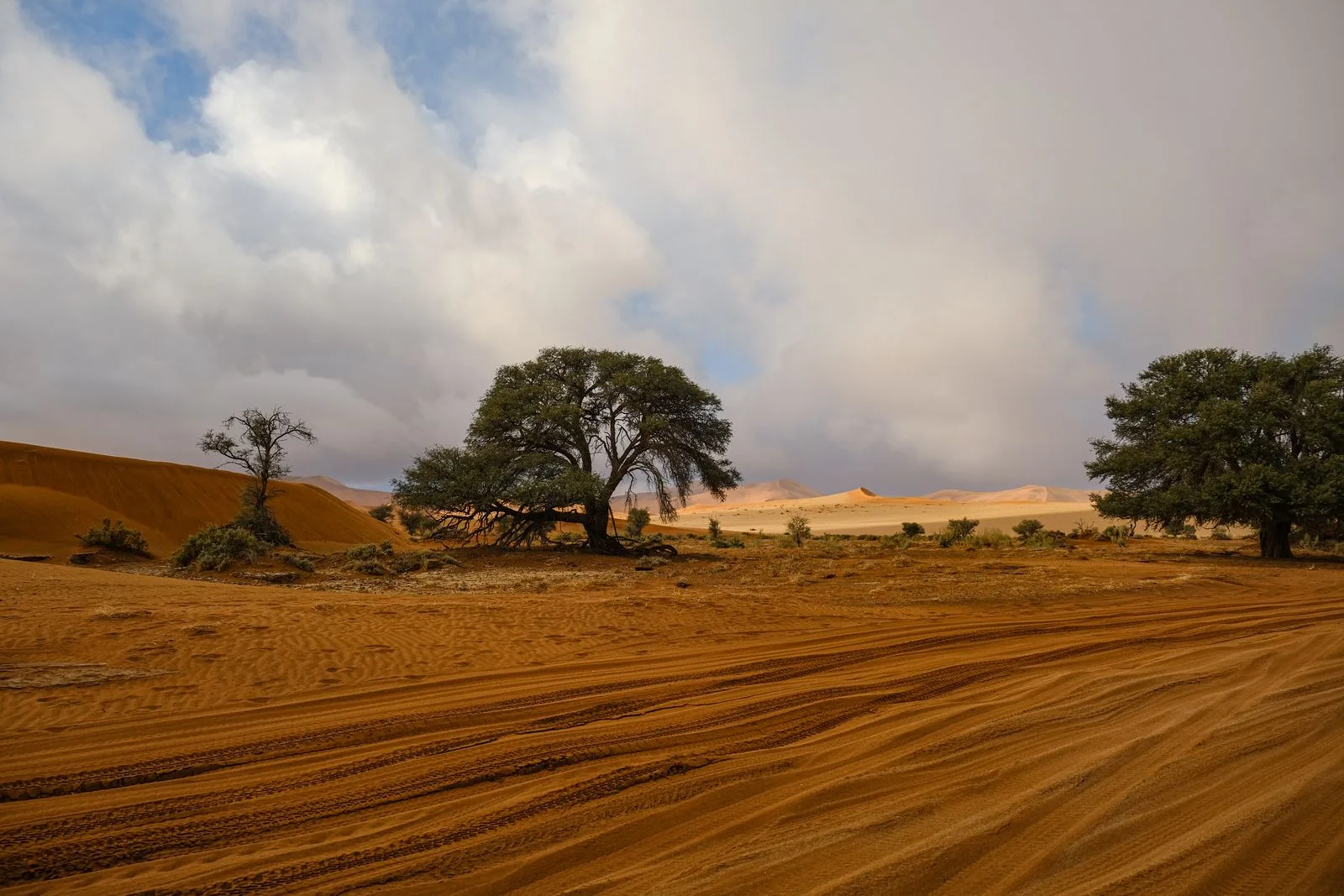
Kgalagadi Transfrontier Park lies in South Africa's Northern Cape, and SANParks also describes a Botswana side that is reached through the same park. This guide adds the Kgalagadi-specific points that our general guides do not cover: the camps SANParks lists, which camps need a 4x4, how the Botswana and Namibia crossings work, access, malaria and climate. For booking windows, cancellation fees and general rules, read our SANParks rest camps guide; for the Botswana permit system, see our Botswana self-drive and camping guide.
How this was checked: sanparks.org blocks automated access, so we read its pages through dated web-archive captures, and give each date because SANParks can change a page afterwards. Botswana's wildlife department (DWNP) website could not be opened.
Which camps does SANParks list?
The SANParks accommodation page (archive capture of 11 August 2026) lists nine places to stay, plus one luxury lodge.
- Rest camps: Twee Rivieren, Mata-Mata and Nossob. Twee Rivieren is called the largest camp and the administrative headquarters, and the only camp with 24-hour electricity and cell phone reception. Mata-Mata and Nossob are described as having no cellphone reception.
- Kalahari Tented Camp: 15 desert tents, 3 km from Mata-Mata, where residents can refuel and buy basic supplies.
- Wilderness camps: Kieliekrankie, Urikaruus, Grootkolk, Bitterpan and Gharagab. SANParks describes them as unfenced.
- !Xaus Lodge: a 24-bed luxury lodge owned by the Khomani San and Mier communities.
The same page gives access notes. Kieliekrankie (50 km, 1.5 hours from Twee Rivieren) and Urikaruus (72 km, two hours) are described as accessible by passenger vehicles, and so is Grootkolk, which it places 20 km from Union's End, where South Africa, Botswana and Namibia meet. Bitterpan and Gharagab are 4x4 only, on one-way access roads, and guests check in at Nossob, not at Twee Rivieren or Mata-Mata.
Where do you need a 4x4?
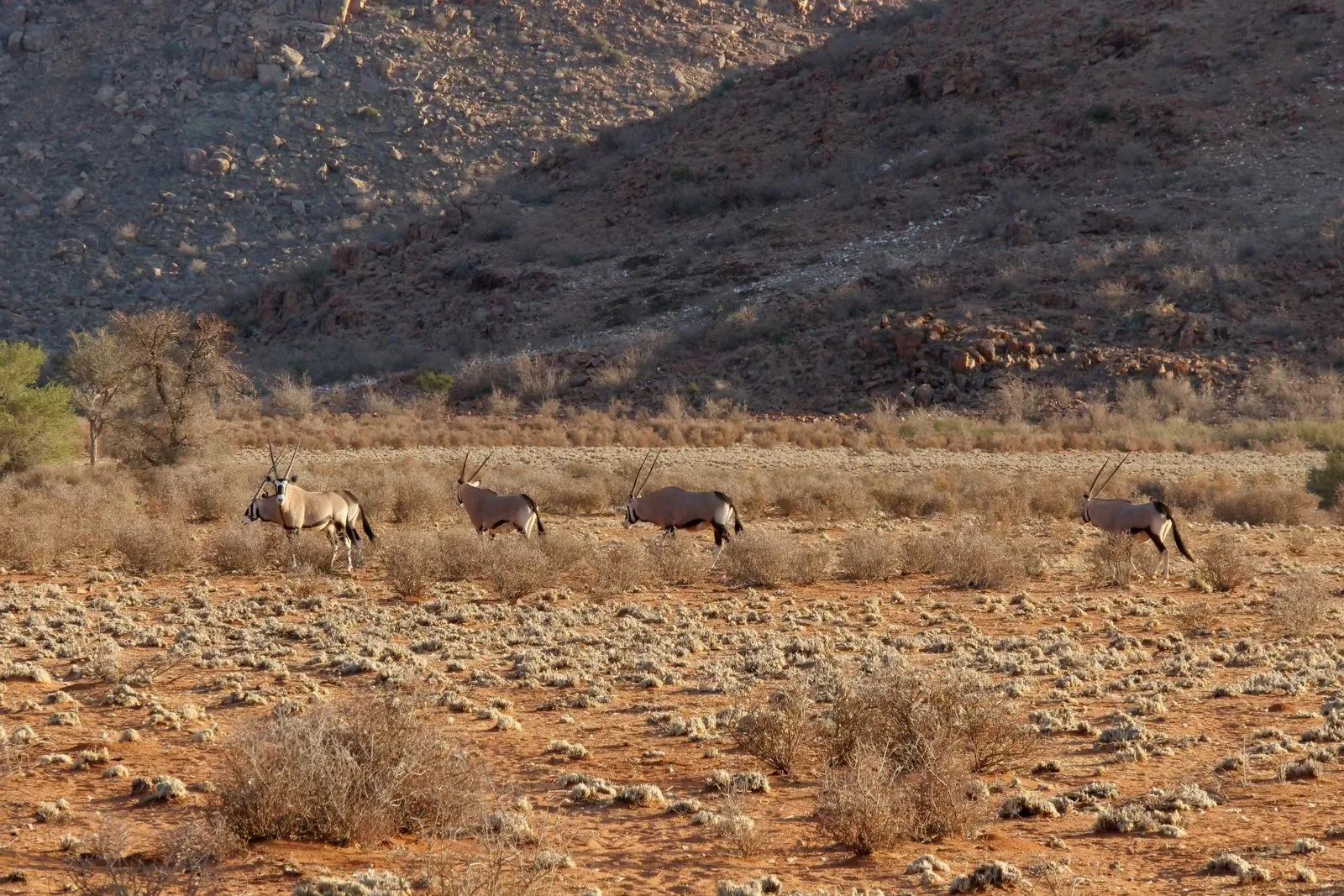
SANParks' "Vital Information" page (capture of 5 January 2026) recommends a 4x4 with high ground clearance and low-range capability for the park generally, and calls it a must for Bitterpan, Gharagab, the Leeudril 4x4 loop and the Nossob Eco-Trail. It says no Unimogs, Overlanders or similar vehicles may go to those four, and no trailers. Its 4x4 trails page (capture of 13 January 2026) adds that the Nossob Eco-Trail needs a minimum of two vehicles, takes children no younger than 12, and runs Monday to Thursday.
On the Botswana side, SANParks' Border Crossings page (capture of 7 February 2025) states: "A 4x4 vehicle is necessary to access the Botswana side of the Park. All routes within Botswana are to be traveled by no less than two vehicles." Camping is listed at Polentswa, Rooiputs, Two Rivers and Mabuasehube. The 4x4 routes need prior booking and can only be driven in one direction as a whole: the Mabuasehube Wilderness Trail (155 km), the Wilderness Trail from Polentswa (257 km), and two direct routes, Nossob Riverbed to Mabuasehube (170 km) and Kannaguass to Kaa (85 km).
How do the border crossings work?
The same Border Crossings page says that anyone leaving the park other than where they came in must complete immigration at Twee Rivieren (Two Rivers), and that a minimum stay of two nights in the park is required to pass through the Mata Mata border post to or from Namibia, or to enter or exit the park to or from Botswana.
- Namibia: the standard black-and-white "ZA" vehicle sticker is required (the park's notice on its main page repeats this). A road levy of R154 per trailer and R242 per vehicle is payable at Namibian immigration. The page also warns of a one-hour winter time difference between South Africa and Namibia, running from the first Sunday in April to the first Sunday in September.
- Firearms: SANParks says none may cross at Mata Mata, Kaa or Mabuasehube, nor be brought into the park, and advises tourists with firearms to use the Rietfontein or Boksputs border posts instead.
For entry and visa rules by nationality, see our visa and entry guide. For the Namibian side beyond the border, see best time for a Namibia safari.
How do you get there?
SANParks' "How To Get There" page (capture of 13 August 2025) puts the park about 250 km from Upington and 904 km from Johannesburg. From Johannesburg there are two routes: via Upington on 255 km of tarred road, or via Kuruman, Hotazel and Vanzylrus, about 340 km of gravel that it calls badly corrugated, where high speed is not advised. Upington airport is the nearest and has car hire.
Plan around the gates: the page says no travelling is allowed in the park after dark and that gate hours are strictly adhered to. Its travel-times page (capture of 21 May 2025) gives Twee Rivieren to Nossob as 4.5 hours, to Mata-Mata and Kalahari Tent Camp 3.5 hours, to Urikaruus 2.5, to Kielie Krankie 1.5, to Bitterpan 6.5 and to Grootkolk 7.5; Gharagab is "not possible in one day". The accommodation page gives shorter times for two of these (Mata-Mata 2.5 hours, Nossob 3.5 hours). SANParks contradicts itself here, so allow the longer figures. We could not read the page with gate opening times, so we give none; check them before you drive. Speed limits are 50 km/h in the park and 20 km/h in camps; off-road driving, pets, motorbikes, quad bikes and open-sided vehicles are not allowed. For general self-drive conduct, see safari safety, wildlife, vehicles and camps.
What does entry cost?
This is the figure we could not bring up to date. The Kgalagadi rates page we could read (archive capture of 11 December 2024) gives the daily conservation fee for 1 November 2024 to 31 October 2025, per person per day: adults (12 and over) R123 for South African citizens and residents, R246 for SADC nationals and R512 for international visitors; children (2 to 11) R61, R123 and R256. A 1% community fund is added to accommodation and activity bookings. That tariff has expired. The 2025/26 tariff year ended on 31 October 2026, and a 2026/27 schedule applies from 1 November 2026. We could not open a Kgalagadi table for either year, so we state no current figure; confirm it on sanparks.org before you budget.
Is Kgalagadi a malaria area?
SANParks' own pages call it "a low-risk malaria area" and say to consult your chemist. The US CDC's South Africa page (malaria section updated 23 April 2025) lists its transmission areas along the Mozambique and Zimbabwe borders, in parts of KwaZulu-Natal, Limpopo and Mpumalanga, and in Kruger National Park; the Northern Cape is not among them. For the Botswana side, CDC's Botswana page (also updated 23 April 2025) lists "Kgalagadi North" and Southern among districts with rare or sporadic transmission and recommends no chemoprophylaxis there, only bite avoidance. The UK's TravelHealthPro (NaTHNaC) Botswana page calls the risk very low in the southern half of the country, but shows no review date, and it does not name Kgalagadi. These are what the sources say, not medical advice: see our official malaria guidance and talk to a travel-health professional.
What is the climate?
SANParks' climate page (archive capture of 3 March 2022) describes an arid climate, with average rainfall from 150 mm in the south-west to 350 mm in the north-east, falling mostly in thunderstorms between November and April. It gives temperatures from -11 °C on cold winter nights to 42 °C in the shade on summer days; the 4x4 trails page says summer temperatures could reach 45 °C and winter -10 °C. We read no figures from the South African Weather Service. For timing, see best time for a South Africa safari and Botswana.
What we could not verify
- The current Kgalagadi daily conservation fee (2025/26 or 2026/27), and any Botswana-side DWNP park, vehicle and camping fees.
- Gate opening and closing times, which SANParks says it strictly enforces.
- The monthly temperature table on SANParks' climate page: its columns are inconsistent, so we did not use it.
- South African Weather Service climate data.
Sources
- SANParks, Kgalagadi Transfrontier Park: Accommodation, archive capture of 11 August 2026
- SANParks, Kgalagadi: Vital Information, archive capture of 5 January 2026
- SANParks, Kgalagadi: Visitor Tips, archive capture of 14 January 2025
- SANParks, Kgalagadi: 4x4 Trails, archive capture of 13 January 2026
- SANParks, Kgalagadi: Border Crossings, archive capture of 7 February 2025
- SANParks, Kgalagadi: How To Get There, archive capture of 13 August 2025
- SANParks, Kgalagadi: Travel Times, archive capture of 21 May 2025
- SANParks, Kgalagadi: Rates and Entry Fees, archive capture of 11 December 2024
- SANParks, Kgalagadi: Climate, archive capture of 3 March 2022
- US CDC Travelers' Health, South Africa and Botswana, read 2 November 2026
- NaTHNaC TravelHealthPro, Botswana country page, read 2 November 2026